
Quentin Cole
This month we are delighted to introduce you to US-based member, Quentin Cole.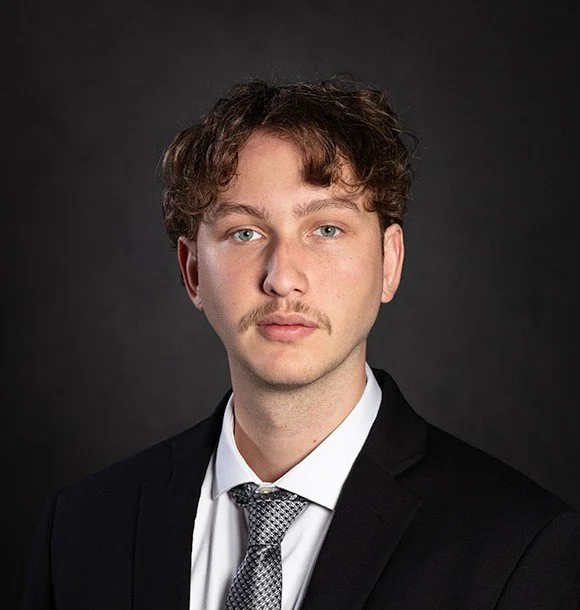
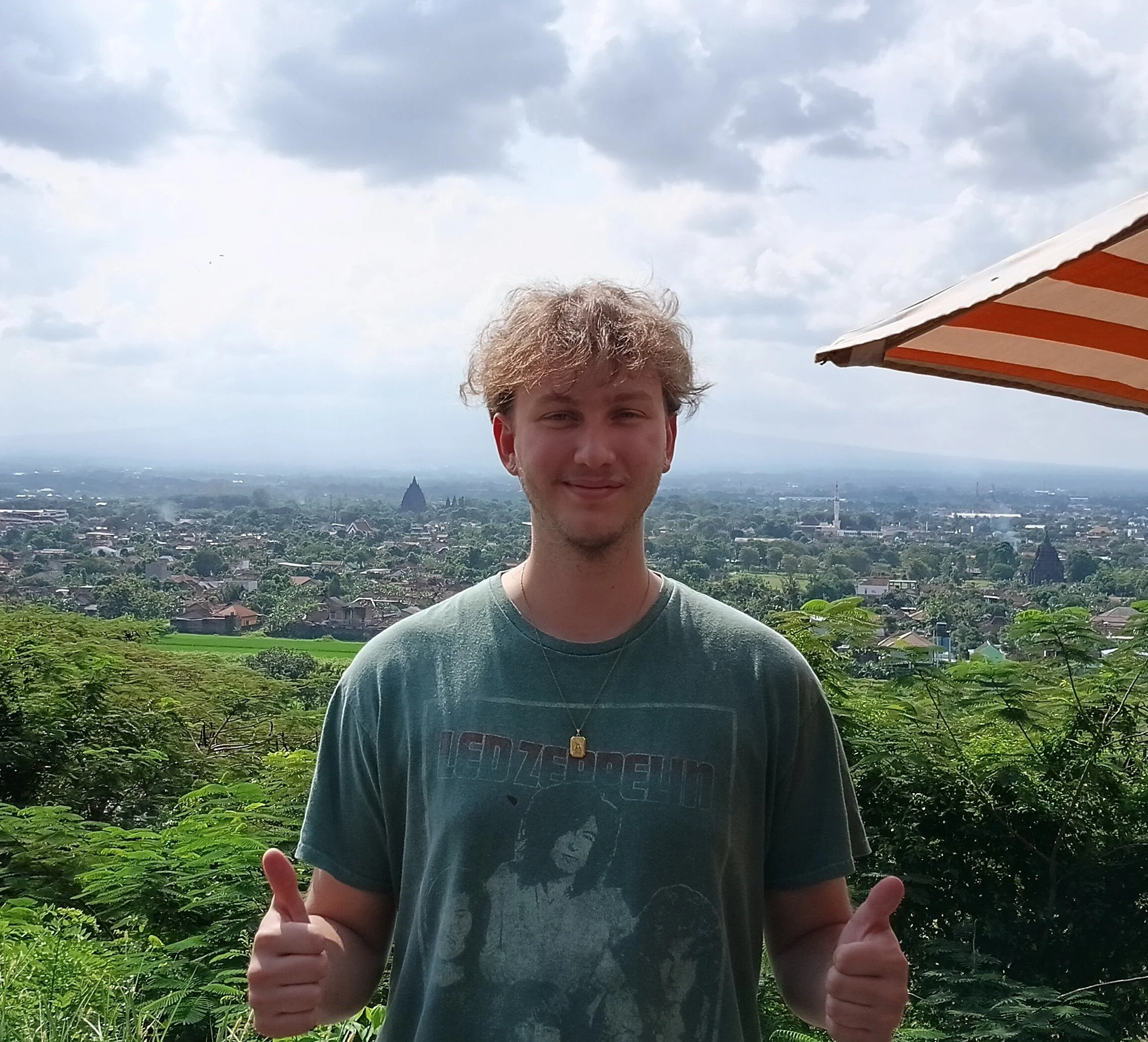
1. Tell us about yourself!
I’m from the United States, currently working as a researcher in the Asian Cultural History Program at the Smithsonian Institution in Washington D.C. In 2025 I completed my B.A. in Anthropology and Asian Studies. Last summer (2025), I lived in Yogyakarta as part of a language-learning program. While my primary academic focus lies in Indonesian Studies, I’ve also done work involving other areas. In addition to museum/heritage studies, I’m passionate about learning about the political and cultural geographies of Indonesia. In my spare time I love to play pool (bermain biliar) and travel around as much as I can!
2. Where does your interest in Indonesia stem from?
I was raised in Bali, Indonesia until I was 8 years old. Prior to this my mom had gone to High School in Jakarta, as my grandfather was an engineer stationed in Jakarta. Later, my parents met teaching English abroad before starting a business in Bali. As I grew up after moving to rural Ohio in the U.S., I didn’t really believe that I grew up in Bali, if that makes sense. I’d hear stories from family and wanted to learn more, thus inspiring my academic studies. So, my academic pursuits are rooted in personal experience, I suppose!
3. What is the nature of your engagement with Indonesia – are you an academic, a professional, an alumni?
I suppose these days I’m primarily an academic / professional, although my engagement with Indonesia is much more personal. I’m generally fluent in Bahasa Indonesia and am fortunate enough to live near a few Indonesian restaurants which I frequent. While I’m still figuring out what space Indonesia will occupy in my life, professional or otherwise, I know that it will occupy some space. If I’m not engaging with Indonesia in some way, I find myself unfulfilled.
4. Have you ever been to an Indonesia Council Open Conference and if so, what is your fondest memory?
I have not! In fact, I’ve never even been to Australia! I would love to attend in the future, as I intend to apply to a couple graduate programs in Australia.
5. How do you think organisations like Indonesia Council can improve Australia-Indonesia relations?
To be honest, I’m somewhat unfamiliar with Australia-Indonesia relations, I’m much more familiar with U.S.-Indonesia relations, so that may colour this response. That being said, the promotion of Indonesia – its politics, culture, etc. – abroad, and especially to the public, is paramount to improving relations. While it seems IC is already doing a great job at this, the more Indonesia is made known to the public, the better. I’m surprised how little is known about the 4th most populous country in the world (in the U.S., at least).
6. What are some of the challenges and opportunities in the Indonesia-Australia relationship?
Again, this answer would be coloured by a more U.S.-Indonesia relations perspective. Coming from an anthropology background, I think public engagement with the Indonesia-U.S./Australia relationship is crucial. This can be done from the “ground up”, such as through free movie screenings, museum exhibits, restaurants, etc. This can be challenging, however the opportunities to learn, make friends, have new experiences, etc., are endless. The more accessible this relationship is to the public, the stronger it will become.
7. Tell us about your favourite Indonesian food experience
Prior to going to Yogyakarta last summer, I thought it wise to try to improve my spice tolerance in the U.S. – I’d eat cabe frequently, and I never thought it was overly spicy. After arriving in Jogya, I went out to eat with my host family at a local restaurant. The waiter brought a bowl of cabe to the table, and after many warnings from my family, I ate one whole. Cabe in Indonesia, generally, are so much spicier! I ended up very teary-eyed and very surprised.
8. Do you speak Indonesian and where did you start learning it?
Growing up in Bali, I was taught Indonesian in elementary school. Of course, I also heard it constantly when out and about, and my parents also spoke it, and tried to teach me what they could. When I moved away, I admittedly forgot most of it until enrolling in Indonesian Language university classes. I also participated in a couple language intensive programs, and I still practice in my spare time. I’d say I’m mostly fluent, now. When I started re-learning Indonesian, despite forgetting just about everything from childhood, I was told I have a strong Balinese accent.
9. What’s your favourite Indonesian food and why?
Mie Gacoan (level 6) with lumpia udang and teh manis. I’m a big fan of spicy food, especially when it’s hot out, and I got hooked on teh manis when I was in Yogyakarta. While in Jogya, I’d go to Mie Gacoan at least once a week. It was cheap, filling, spicy, open late, and never disappointed!
10. What’s your favourite Indonesian music/song/writer?
Dewa 19! I found out about them a few years ago and quickly became obsessed. If I want to listen to music in Bahasa Indonesia, they’re generally my go-to. I’ve been known to sing Roman Picisan when out for karaoke in Indonesia.
11. What’s your favourite Indonesian idiom?
Less an idiom, but I’ve always loved “Pada zaman dulu…” when beginning a story. Literally, it can translate to “In the first era…”, although the concept of “the first era” being applied to any point in the past, far past or recent, as it often is, always struck me as poetic, dramatic, and a bit funny. This phrase became a bit of an inside joke with me and my Javanese host dad last summer. I try to squeeze it into my storytelling when I can.
[Last month’s PAY IT FORWARD question]:
Tell us a story about an Indonesian or Indonesianist that you think others should know too, and why? Could be an everyday person, does not have to be a popular one.
I’d like to mention a few amazing women who made a big difference in my childhood: Helmi, Wiwik, Wiwin, Kadek, Hendra, Eka, Sinta, and many others. Working occasionally behind the scenes, these women taught, helped, and comforted me as a child.
As for Indonesianists, it might be a bit antiquated now, but the Blair Brothers were a big inspiration to me. I think their original documentaries [such as the Emmy-nominated five part series, Ring of Fire: An Indonesian Odyssey] promoted the diversity of Indonesia well to a generally western audience.
And don’t forget to suggest a pay it forward question for next month 😊 :
What was your favorite market experience (pengalaman pasar) in Indonesia and why? Bartering, meeting people, etc.