
Valentina Yulita Dyah Utari
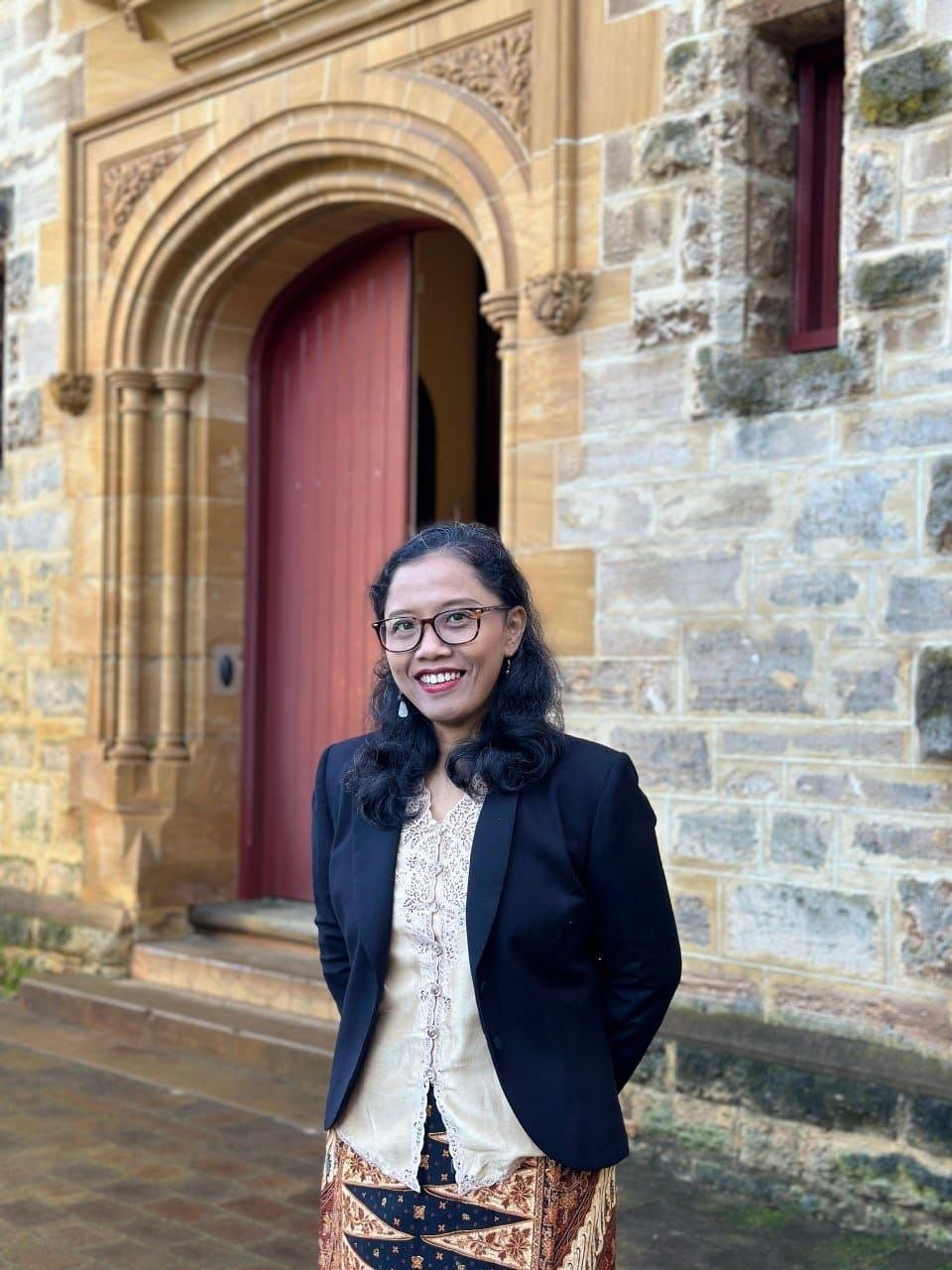
This month we are delighted to feature Valentina Yulita Dyah Utari, Ph.D., or Utari, from the SMERU Research Institute. 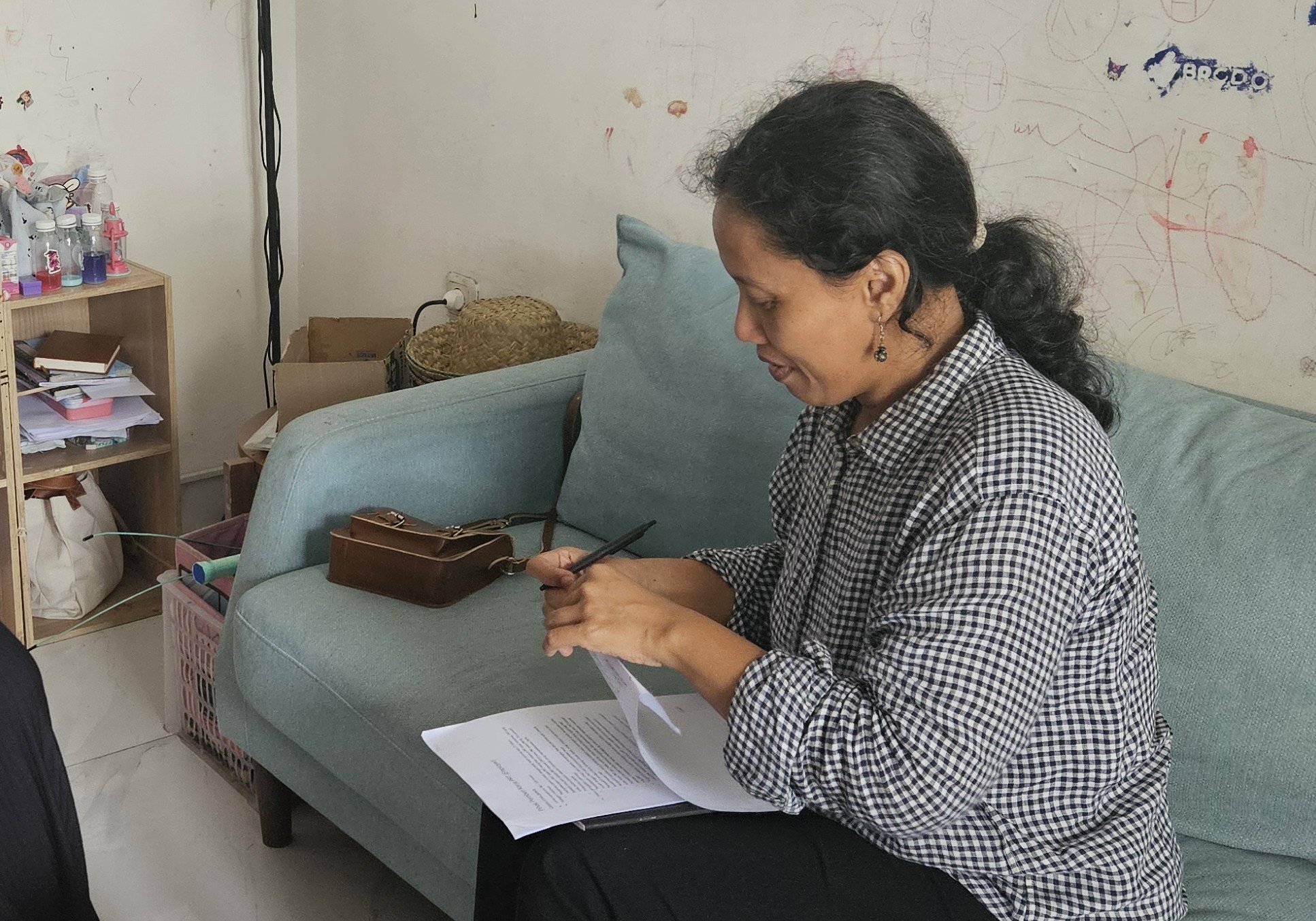
Tell us about yourself!
My name is Valentina Yulita Dyah Utari. In Javanese tradition, family names are uncommon, so whenever a form asks for one, I simply use the last word of my name. I am a senior researcher at The SMERU Research Institute. My research focuses on gender and development, care work, and social policy. I started working with SMERU as an in-house translator/editor. I did my PhD at the University of Western Australia. My thesis’s title is “Gender Identity and Unpaid Carework: An Ethnography of the Lives of Female Indonesian PhD Students and their Families in Australia”. Outside my research work, I volunteer with LETSS Talk, a learning space about sex and sexualities. My community works with them includes co-organizing the annual Kartini Conference on Indonesian Feminisms.
Where does your interest in Indonesia stem from?
My interest in Indonesia’s social complexities began in childhood, as a Javanese Catholic girl in Surabaya. Early on, I questioned why my brother escaped chores while my sister and I couldn’t. My Catholic schooling contrasted with the culture shock at university, where my identity as a Javanese Christian was questioned. These experiences deepened in my first job at a paper factory, witnessing the stigma and double burden placed on working women. A male worker harassed a pregnant colleague. I stopped him but I never forgot. Later, as a translator across Indonesia and Timor-Leste, I saw these issues were widespread and systemic.
What is the nature of your engagement with Indonesia – are you an academic, a professional, an alumni?
I engage with Indonesia as a professional researcher and social policy practitioner. In my role at SMERU, I currently lead and contribute to empirical studies that inform national and subnational policy discussions, focusing on gender equality, care work, care-economy infrastructure, and women working in informal sectors. For my master’s and doctoral theses—I completed these studies at the University of Melbourne in 2013 and the University of Western Australia in 2024—I deepened my questions about Indonesian Studies, particularly regarding women, care work responsibilities, and gender identity.
Have you ever been to an Indonesia Council Open Conference and if so, what is your fondest memory?
I've attended ICOC three times: twice online and once in person. My first experience in 2021—during the COVID-19 pandemic—was nerve-wracking as I presented my PhD findings in the presence of my supervisor. In 2023, I joined the hybrid conference remotely while relocating to Indonesia. In 2025, I presented research on domestic workers, which sparked lively discussions and new collaborations—including a podcast with PhD scholars at the University of Melbourne. Meeting old lecturers and engaging with many new people in person made this last ICOC especially memorable, pushing me beyond my comfort zone.
How do you think organisations like Indonesia Council can improve Australia-Indonesia relations?
In the 2025 ICOC, I befriended an SBS Indonesia journalist, and we keep in touch regularly. I introduced the journalist to my research and to SMERU studies in general. This makes me wonder: how can we make research easy to understand for people from different cultural backgrounds and, of course, benefit them? So perhaps the Indonesia Council can create a space for knowledge translation and collaborative storytelling between researchers, journalists, and community advocates.
What are some of the challenges and opportunities in the Indonesia-Australia relationship?
Ongoing funding cuts to Indonesian studies in Australia threaten future bilateral expertise, while Indonesian postgraduate students—especially PhDs—face intense academic pressures. Those relocating with families often struggle with isolation and balancing research with care duties. These challenges are also opportunities: organizations like the Indonesia Council could establish mentorship and peer-support networks to address gendered issues such as unpaid care work and academic strain. Strengthening support for international scholars and their families through community networks will help build resilient, long-term academic and institutional ties between Australia and Indonesia.
Tell us about your favourite Indonesian food experience
I am not a food enthusiast—I usually eat simply because I have to! However, there is one moment that truly stood out to me. It was in Maluku that I first tried papeda, paired with fresh, savory yellow fish soup (kuah kuning). I can no longer remember the exact year it happened, but the distinct flavour, rich texture, and the warmth of that meal in Maluku have stayed in my memory ever since.
Do you speak Indonesian and where did you start learning it?
Javanese is my mother tongue. I started learning Indonesian when I was in kindergarten. At home, I use a mix of Javanese (with Surabaya dialect) and Indonesian.
What’s your favourite Indonesian food and why?
I am not a food enthusiast—I usually eat simply because I have to! However, there is one moment that truly stood out to me. It was in Maluku that I first tried papeda, paired with fresh, savory yellow fish soup (kuah kuning). I can no longer remember the exact year it happened, but the distinct flavour, rich texture, and the warmth of that meal in Maluku have stayed in my memory ever since.
What’s your favourite Indonesian music/song/writer?
I love musikalisasi puisi by AriReda—all their songs. My background in choir also shapes my taste in music. I like to hear people sing in a choir or acapella.
[Last month’s PAY IT FORWARD question]:
What is your favourite mode of transport in Jakarta and why?
I haven’t lived in Jakarta since 2019. Back then, I used public transportation: Metromini, Kopaja, TransJakarta, or KRL—depending on where my destinations were. I used Gojek when I needed to. Or, walking to/from my office in Cikini from/to my kos-kosan in Kebon Kacang.
Since moving back to Indonesia and working remotely from Surabaya, I have depended on Gojek to beat Surabaya’s traffic and its super-hot weather. I am still gathering my keberanian to ride a motorcycle! In 2025, during my data collection in Jabodetabek, I used a combination of Gojek, TransJakarta, KRL, and LRT to reach my interlocutors’ homes.
And don’t forget to suggest a pay it forward question for next month 😊 :
What storybooks or Indonesian authors would you recommend to someone who is about to live or work in Indonesia to help them understand its social and cultural realities?