
August means Tujuhbelasan or the 17th of August Independence Day Celebration, with this year's national theme of Indonesia Berdaulat, Adil, dan Makmur (A Sovereign, Just and Prosperous Indonesia).
This year’s celebrations also arrive alongside pointed questions about what sovereignty actually means in this 81st celebration: a language with a history of claims made outward, toward foreign capital and foreign powers, but also a claim made inward, about who gets to speak for the nation and whose dissent falls outside acceptable bounds. That inward question has taken on particular weight this year: ahead of President Prabowo Subianto’s 81st Independence Day State of the Nation address, an independent collective called the Interdisciplinary Intellectual Forum (FIAD), with more than 80 members from across Indonesia's academic community, released a critical 16-page manifesto at Taman Ismail Marzuki in Jakarta, warning of a deep national and democratic governance crisis.
This newsletter also contains update on the recent Asian Studies Association of Australia (ASAA conference), at Deakin’s Geelong waterfront campus that delivered a packed program for Indonesianists, and coincided with the release of the Asia Capability Report. We were dismayed to learn of the proposed changes to Deakin’s Languages Program, however, and followed up with a letter to the caretaker Vice Chancellor to outline our concerns at the impact on language learning, including Indonesian studies. Luke Gosling MP subsequently raised the issue in Parliament’s Federation Chamber, more details below.
There is also plenty of information about book launches, art acquisitions, events, call for papers, petitions and other actions, jobs and opportunities. We’re also happy to feature a story by Grace Tan-Johannes, about the late Papuan and first female novelist Aprila Wayar and the Black Rose Scholarship set up to support her daughters. Our new Grants and Prizes Officer, Trisna Mulyati, also shares her experience of ASAA; while our featured member is Dirk Tomsa.
We hope there is something in this bumper edition that informs, challenges or inspires you, and that together the content offer a small reflection of Indonesia at 81: a nation being celebrated, debated and continually reimagined. We also send our heartfelt thoughts and solidarity to the people of Flores and surrounding communities in eastern Indonesia affected by the recent earthquake, and to all those facing its aftermath. We wish everyone affected strength, safety and support in the days ahead.
Monika Winarnita
Guest Editor and Treasurer, Indonesia Council
Reminder for the 2027 ICOC
The 2027 ICOC will be held at Charles Darwin University, Darwin Larrakia Country organised by Nathan Franklin (venue was introduced and announced at the Indonesia Council AGM in July 2026). The ICOC will run from the 21st to 24th June 2027 and further details will be available on our website.
What’s happening
Deakin Advocacy: A Parliamentary Response
On 3 June 2026, Deakin’s Academic Board approved a set of changes that would downgrade the major to a minor across all four languages—Indonesian, Spanish, Mandarin and Arabic—abolish the Diploma of Languages, and move all remaining language teaching online. Indonesia Council wrote to Deakin to express our deep concerns that these changes risk compromising Australia’s long-term strategic interests, particularly in relation to our engagement with Indonesia and the wider Indo-Pacific region.
Our letter to the Deakin caretaker VC received a reply from the office of Luke Gosling MP (Federal Member of Solomon NT, Darwin and Palmerston), one of many MPs and Ministers copied on to the letter. Luke raised the issue outlined in the letter in Parliament’s Federation Chamber. He has been a tireless advocate of Indonesian Studies for many years (see for example this statement on Indonesian language and the Australian curriculum from 2024). Luke said on 13 August 2026:
“I was recently contacted by academics that expressed deep concerns about the proposed changes to Deakin University's language program. These changes include downgrading the Indonesian language from a major to a minor, abolishing the Diploma of Languages and, perhaps most concerningly, moving all language provisions from in-person to online. These changes would severely diminish the learning experience of language students and have a significant impact on achieving any level of language fluency. It also flies in the face of this parliamentary committee's findings that we are at a critical juncture for our country's Asia capability…. My pain point is that this isn't just about classroom learning; it's actually about our national capacity. There are many good programs that have been in existence in the past but are now no longer. I think we should be looking at them and continuing to find those community-to-community approaches, those business-to-business approaches and those subnational engagements as well as the important work that we do at a national level and at a parliament-to-parliament level with our near neighbours in the ASEAN. Australia has always wanted to influence the Indo-Pacific, but we also need to start making the tangible impact that comes from knowing our region better."
Luke Gosling MP’s full statement to Federation Chamber on 13 August can be found here.
From musical concerts at the National Carillon to flag ceremonies at Federation Square
To mark the 81st Indonesian Independence Day, various events took place across Australia, many of which were organised by and for the Indonesian diaspora community and featured Australian and Indonesian collaboration. In Canberra, an Indonesian Musical Concert was held at the National Carillon, featuring Senior Carillonist Dr Thomas Laue alongside angklung performers from the Indonesian Women's Association.
In major Australian capital cities, the annual flag ceremony was held at the Indonesian Consulate General, with Melbourne having an additional public celebration in the afternoon at Federation Square (CBD). The celebrations are still coming, with Indonesian Ambassador HE Dr Siswo Pramono set to feature as a guest speaker at the Australia Indonesia Association annual Winter Dinner on 22 August.
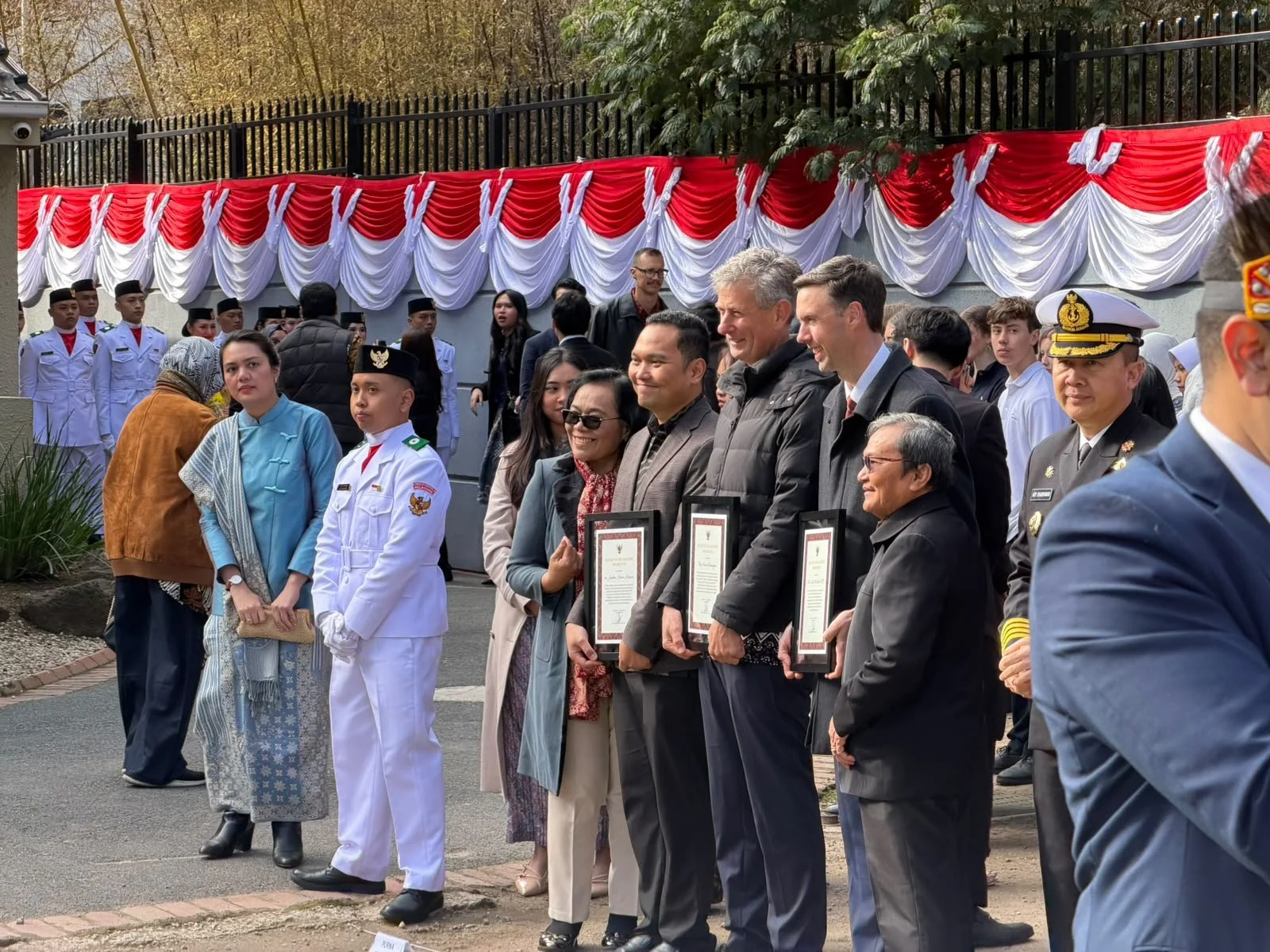
The Indonesian Consul General for Victoria and Tasmania, Yohannes Jatmiko Heru Prasetyo, on 17 August at KJRI Melbourne awarded three people for their dedication to Australian-Indonesian relations. Those holding placards from Right to Left: Tom McIntosh MP, co-convenor of the Victorian Parliamentary Friends of Indonesia; Edward Buckingham, Chair of the Australia Indonesia Business Council Victoria chapter; Dr. Jonathan Hasian Haposan, Chair of Mata Garuda ANZ. Photo courtesy of Billy Adison Aditijanto.
ASAA 2026
A Big Few Days for Indonesian Studies
The Asian Studies Association of Australia conference at the Deakin University Geelong Waterfront campus, held 29 June – 3 July, delivered a packed program for Indonesianists. The Indonesia Council Inaugural Undergraduate Day gave emerging students a real taste of the field; kicking off with an “Introduction to researchers, their experience and further research ideas” panel chaired by Monika Winarnita (with speakers that includes IC Committee members, Mirza Kusrini from Institute Pertanian Bogor IPB and Jarrah Sastrawan ANU). Later, a “Youth, mobility and engagement opportunities” session, chaired by Tamara McGaw, facilitated discussion between panellists on pathways into Indonesia-related study, exchange, and professional engagement. Panellists were drawn from organisations including the Australia Indonesia Youth Association (Annabelle Love), Australia Indonesia Youth Exchange Program and the National Australia Indonesia Language Awards (Angus Baranikow), Australia Indonesia Muslim Exchange Program (Ridvan Kilic), New Colombo Plan alumni and ACICIS (Emma Bamford) and CAUSINDY (Jarrah Sastrawan).
The Indonesian Studies Roundtable on the third day of the conference was chaired by Elisabeth Kramer. It brought together IC Exec Committee members in discussion with colleagues including Ken Setiawan (University of Melbourne), Sharyn Graham Davies (Herb Feith Centre, Monash), Alistair Welsh (Deakin), Jarrah Sastrawan (ANU), and Robbie Peters (University of Sydney), alongside PhD students Annisa Laura Maretha (Deakin) and Pohling Tan (University of Massachusetts). The Roundtable coincided with the release of Tim Watts MP's Security and Prosperity in Asia: Building Australia's Asia Capability report, which became a natural focus of discussion, and it was this conversation that prompted the Council's Deakin advocacy letter mentioned above.
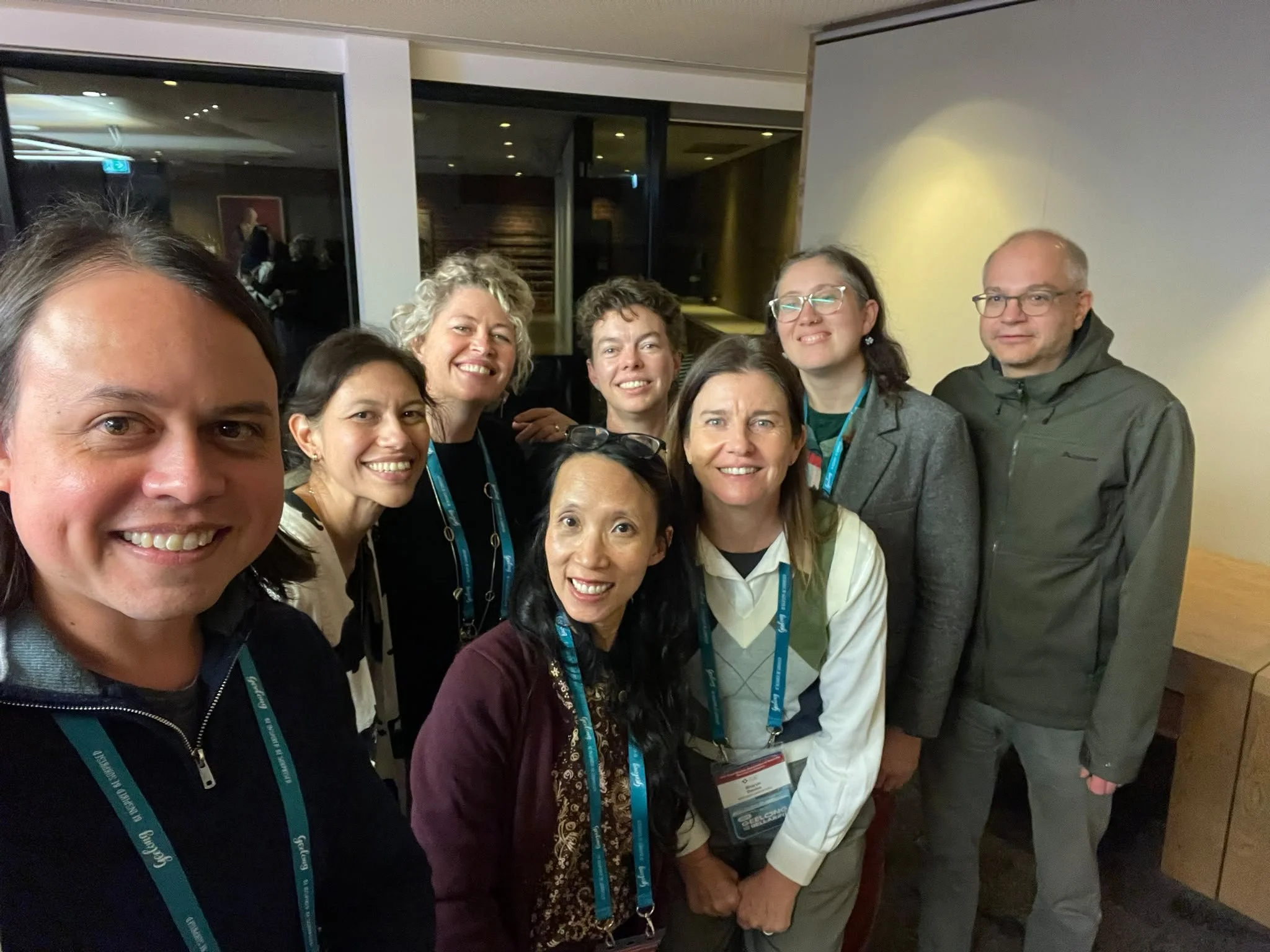
Photo from the AGM with IC Committee Members (Lis, Natalie, Elly and Monika) that was also attended by Jarrah Sastrawan (Selfie photo credit), Sharyn Graham Davies, Dirk Tomsa, Robert Cribb and online attendance and contribution by David Reeve and Elena Williams among others.
Our AGM was also held at the end of the third day of the conference. Led by President Natali Pearson, several committee positions were confirmed: Natali Pearson and Elisabeth Kramer returning to their position as President and Secretary respectively, Tamara McGaw as new Vice President, Monika Winarnita as Treasurer (after the AGM), Ayu Siantoro as Postgraduate Representative, and Trisna Mulyati taking on Grants and Prizes officer position, with Elly Kent continuing as a General Executive Council member after her 2 years as the Treasurer.
A vote of thanks was extended to outgoing Vice President Jeremy Kingsley at the AGM in recognition of his valuable contribution to the Indonesia Council Executive Committee. In particular, the Council acknowledged Jeremy’s role in strengthening and expanding the Executive Committee’s positions and various advocacy work done by the Council, as well as his important contribution to the formal registration of the Indonesia Council as an incorporated association in Australia under its legal name, Indonesia Council Inc. His commitment, guidance, and service to the Council are greatly appreciated. Full details of the current team are up on our Executive Team page.
Other cool stuff
Australian War Memorial (AWM) acquisition
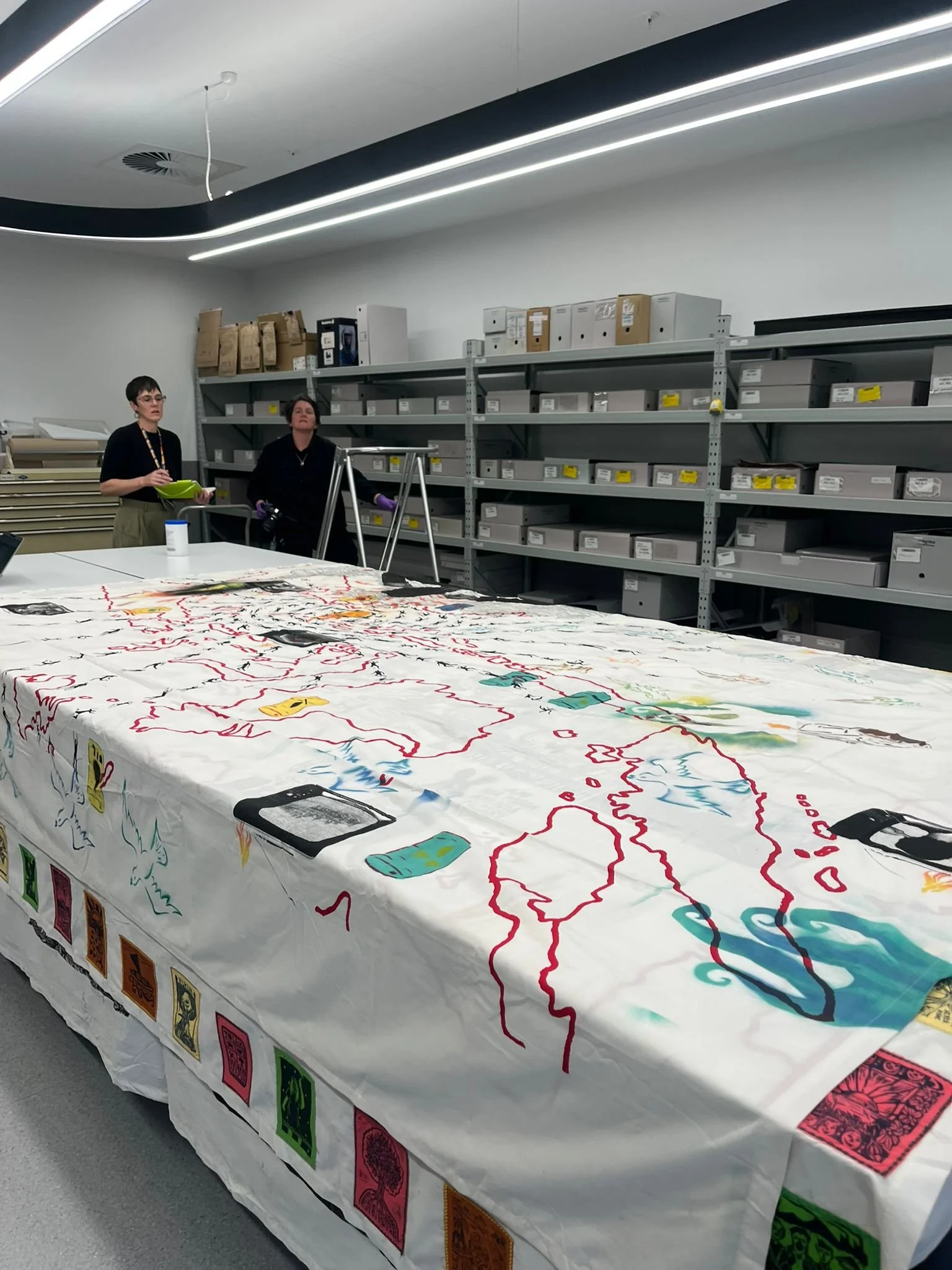
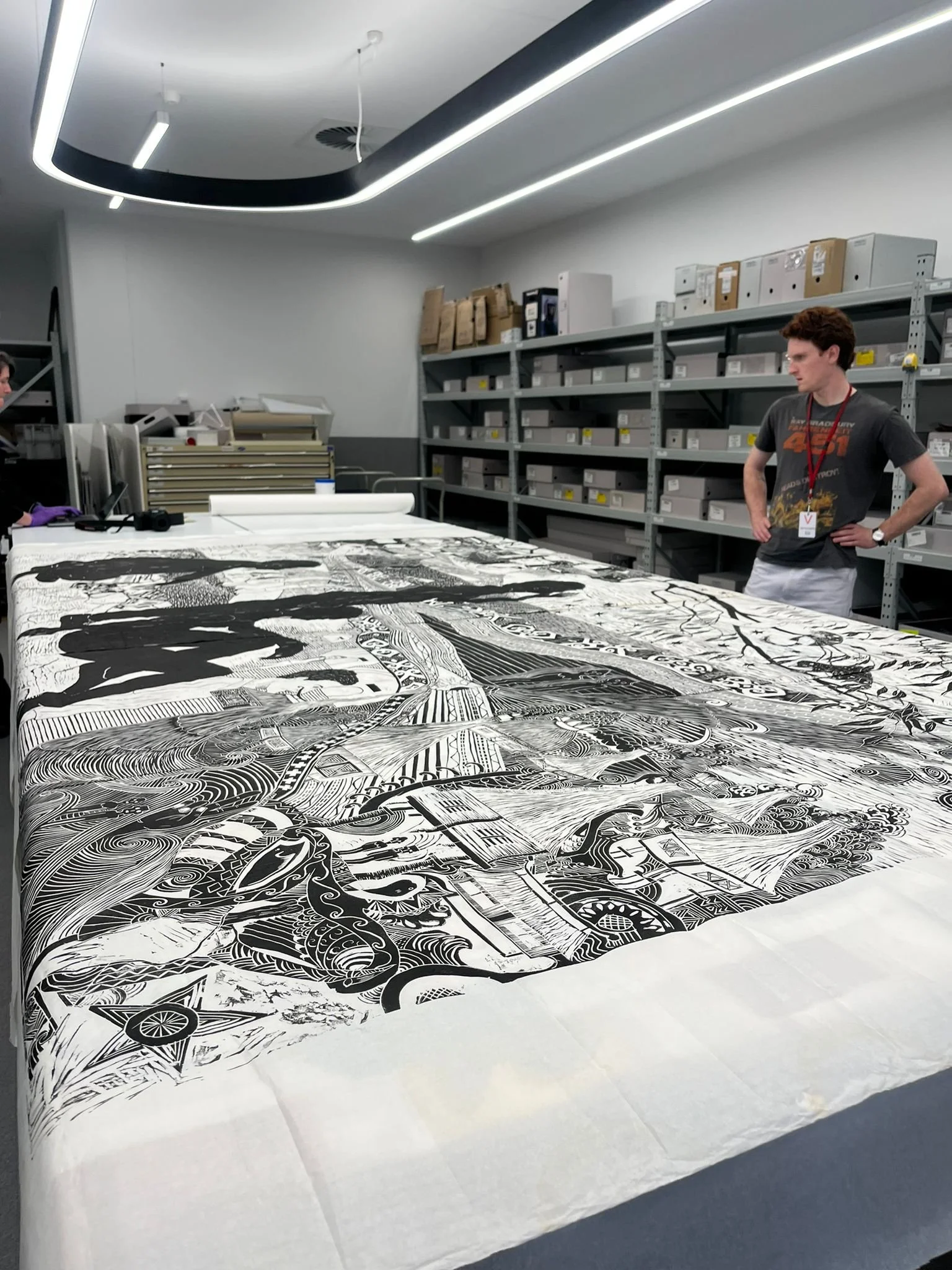
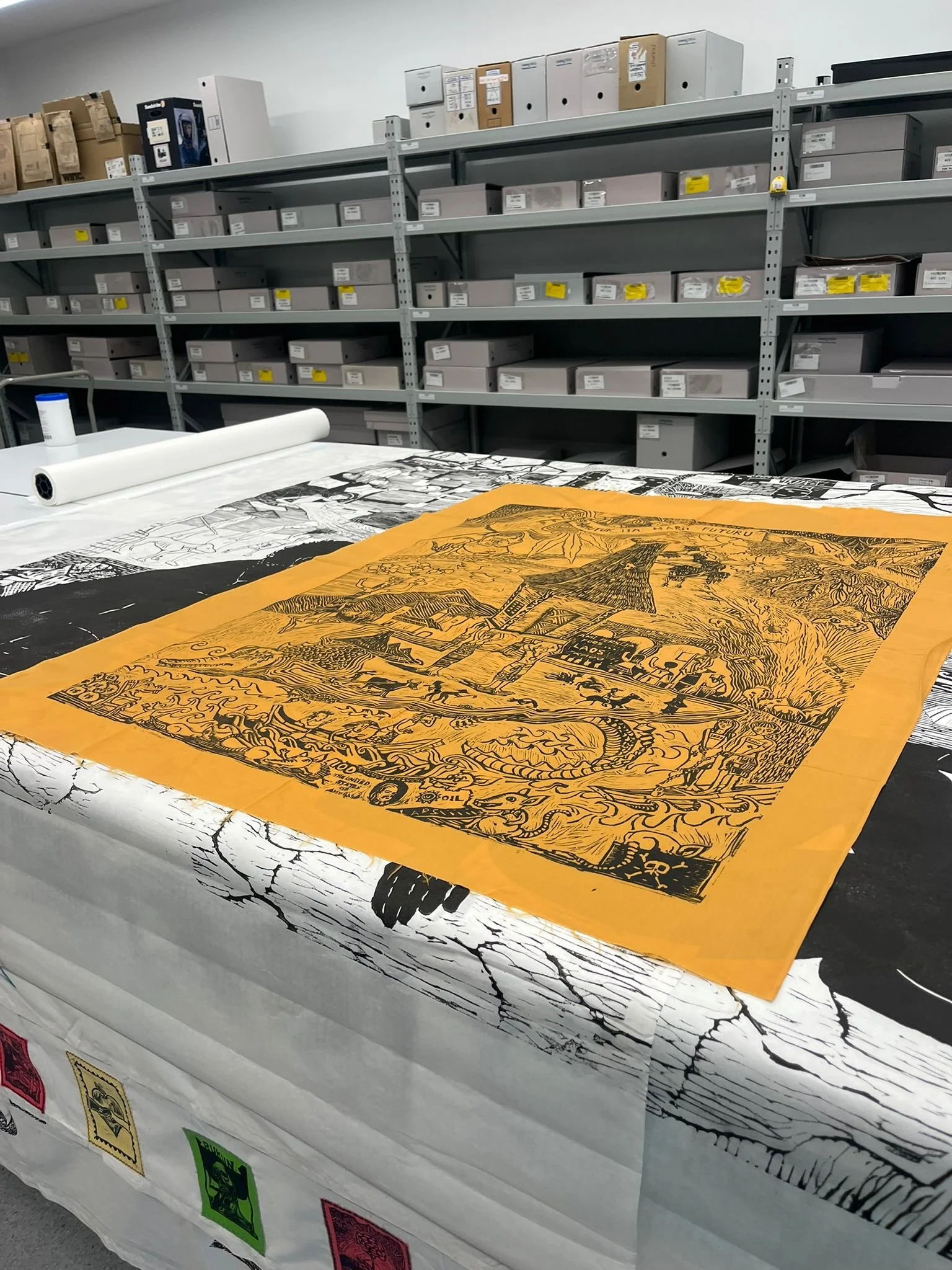
Photos courtesy of Angie Bexley
In June, the AWM acquired three large-scale print works made collaboratively by Canberra's Culture Kitchen, Yogyakarta's Taring Padi, and Timor-Leste's Gembel art group. The results of these large-scale works made with woodblock, the linocuts screen print were also the outcome of collaborative project made and exhibited in Australia, New York and London between 2006 and 2009. The works addressed political and environmental issues and were undertaken as part of a series of exchanges to support greater understanding between the countries through art and culture. Angie Bexley, a key collaborator, wrote about the project in 2007 for Inside Indonesia. The AWM plans to feature the works in a future Timor-Leste display.
ACICIS Book launch in Sydney at the Macquarie University City Campus
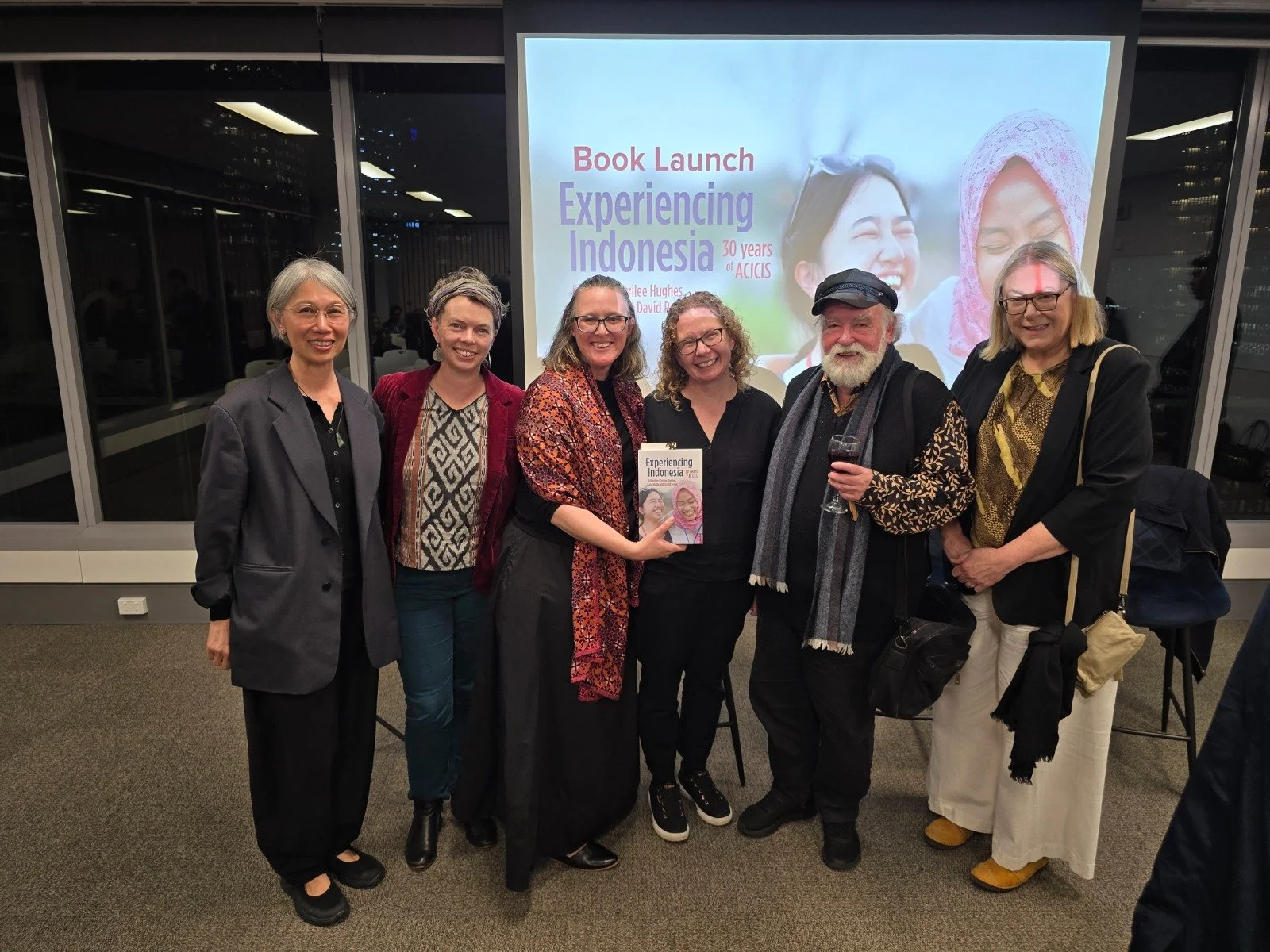
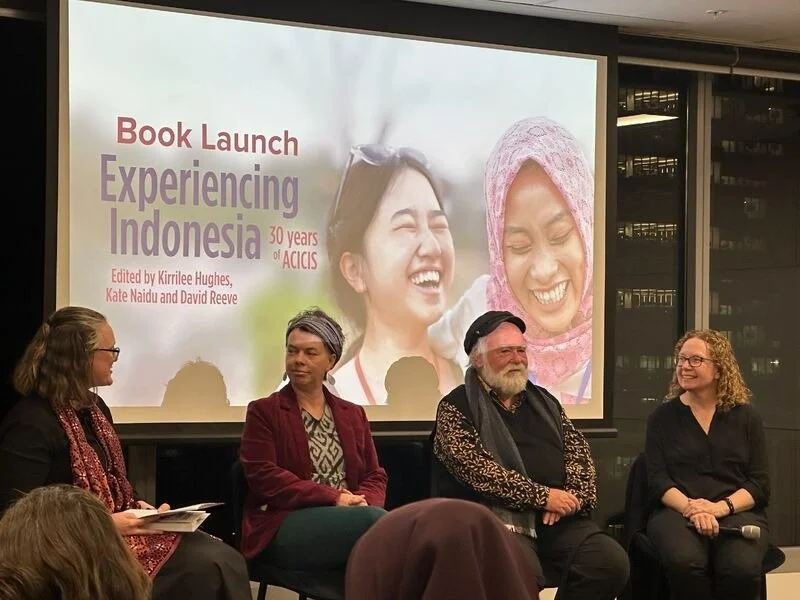
On Wednesday evening, the 12 August 2026, Experiencing Indonesia: 30 Years of ACICIS (published by ANU Press) was launched with a panel that feature the Editors Kirrilee Hughes, Kate Naidu, and David Reeve in conversation with Indonesia Council’s Exec Elly Kent. This book charts ACICIS’ institutional journey from its origins to now, tracing the development of innovative, experiential learning abroad programs built in partnership with Indonesian institutions and communities. Drawing on chapters from alumni, staff members, and partners, it weaves together personal stories of in-country experience with broader reflections on what three decades of engagement have meant for host communities and Australia-Indonesia relations.
Southeast Asia Update with 2026 Oration by Sri Mulyani at the University of Melbourne
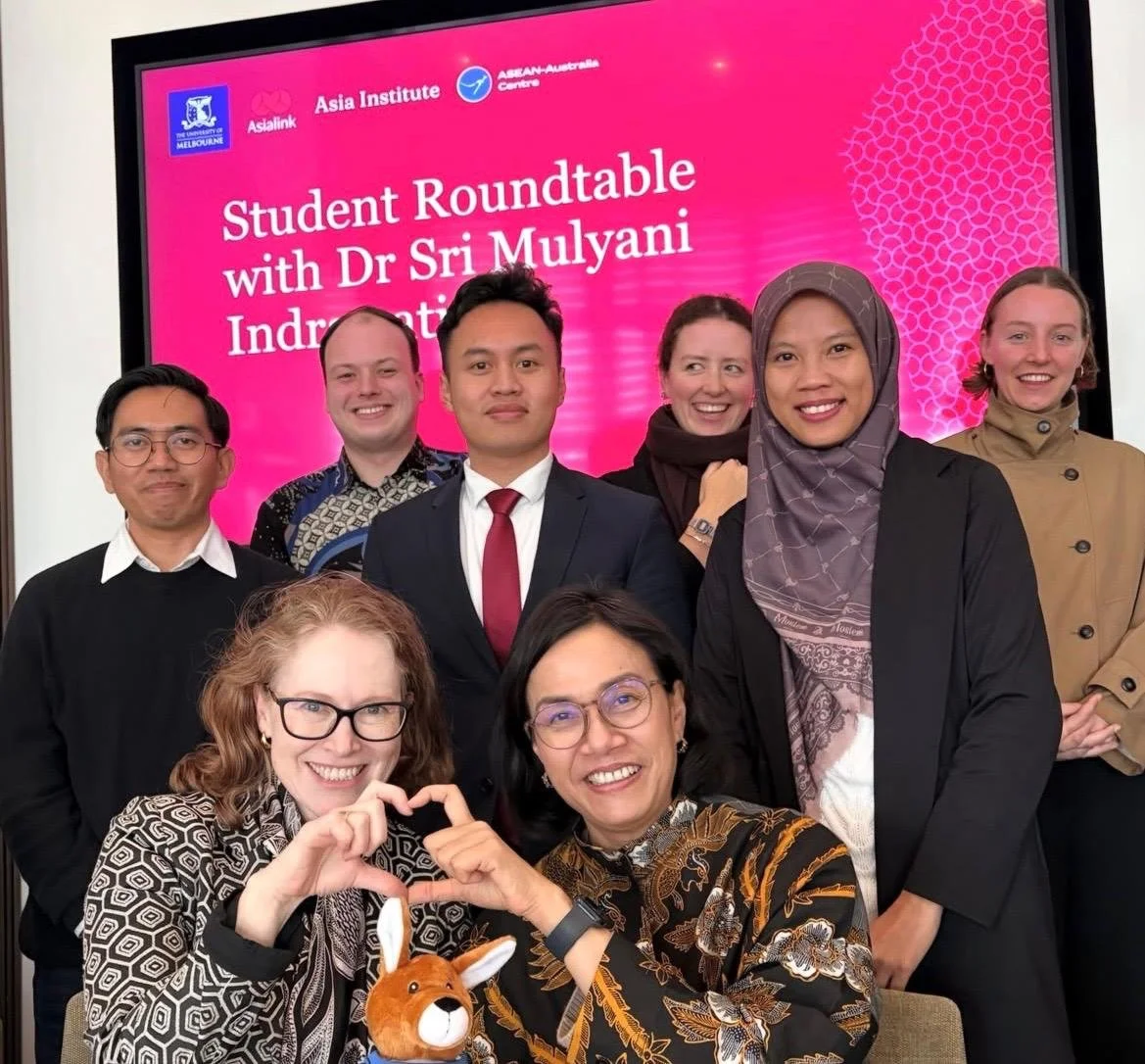
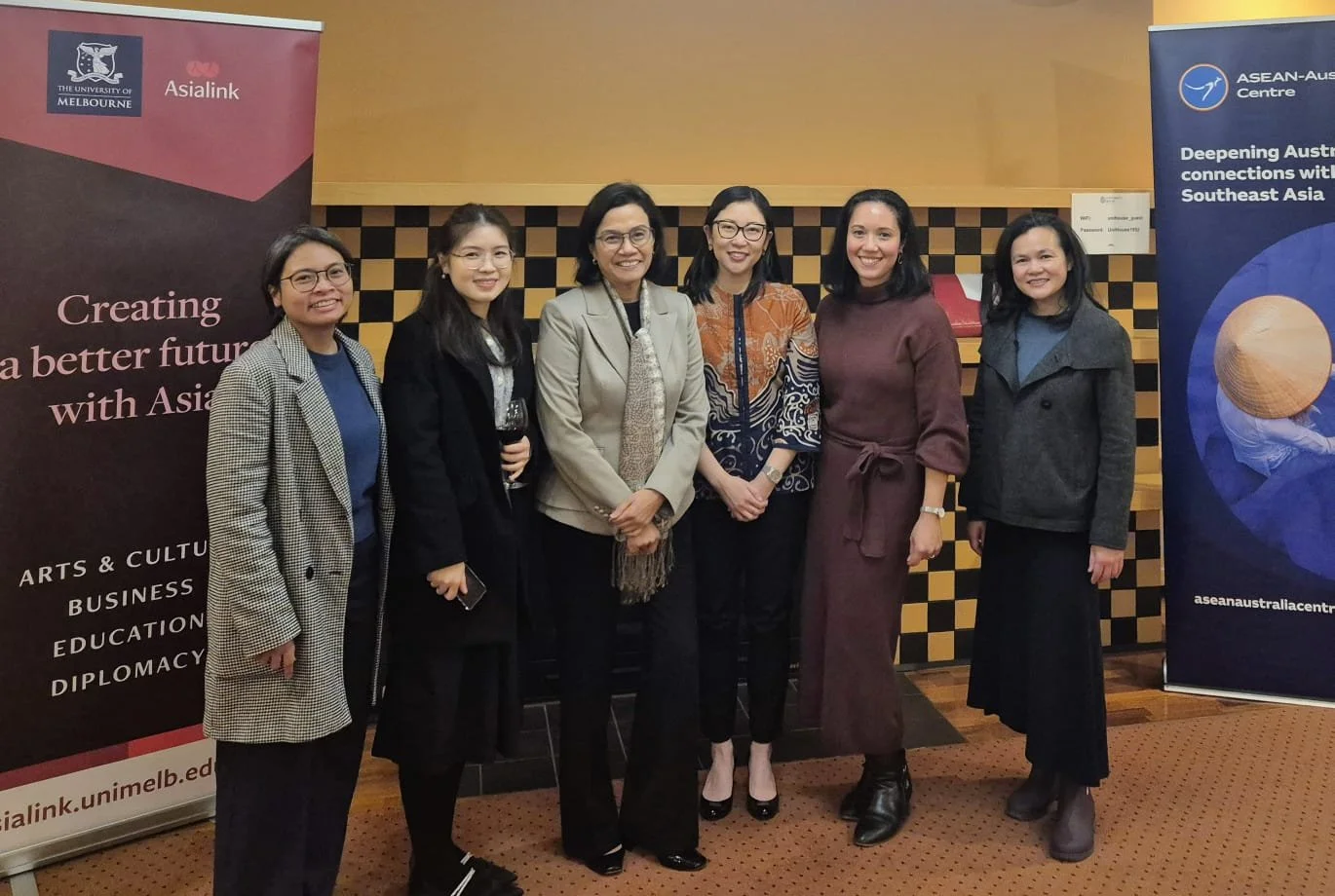
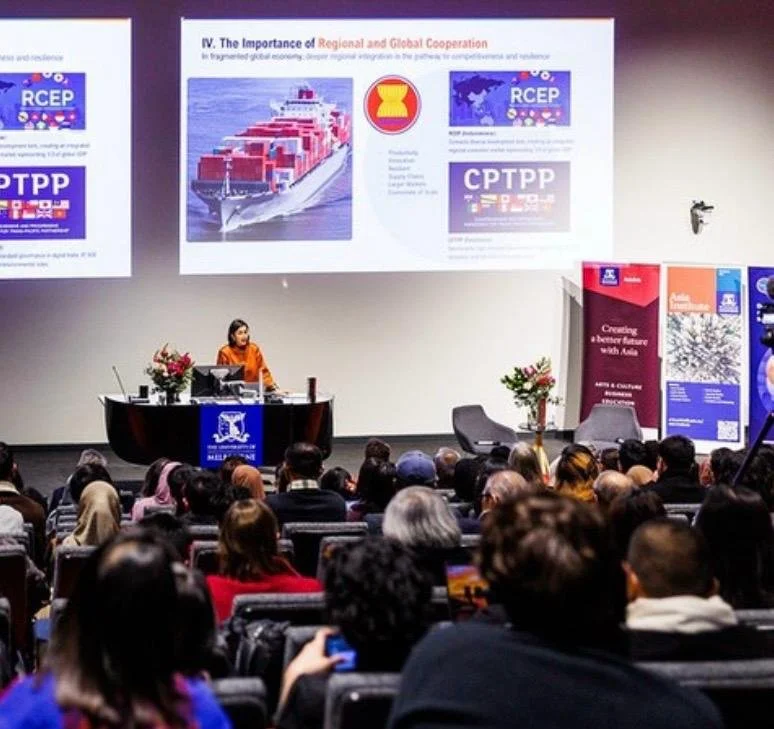
On 11 August, Asialink and the University of Melbourne’s Asia Institute, with support from the ASEAN-Australia Centre, hosted the inaugural 2026 Southeast Asia Update. The program featured prominent Indonesianists and academics including Charlotte Setijadi, Sebastian Dettman, Andrew Rosser, Vedi Hadiz, Tiara Marthias and Trissia Wijaya, alongside former Indonesian Finance Minister Sri Mulyani Indrawati, across panels on democracy, security, economic development and social inclusion. On 12 August, Sri Mulyani delivered the 2026 Southeast Asia Oration, “Governing for Growth: Democracy and Development in Southeast Asian Countries”. Her visit also included separate engagements with Australian students studying Indonesia, Indonesian postgraduate students, and PPIA Indonesian undergraduate students, providing opportunities for students to engage directly with one of Indonesia’s most prominent economic and public policy figures.
Upcoming events
43rd Indonesia Update
18-19 September | Australian National University | Hybrid
The event will take place on 18 – 19 September 2026 at the Coombs Lecture Theatre, Australian National University and online via Zoom. The theme is Islamic Diversity in Indonesia: exploring the relationship between Islam and diversity in today’s Indonesia. Registration is now open — details here.
Tony and Yohanni Johns Lecture 2026
Wednesday 26 August | 5:30–7:00pm | Australian National University | In-person
The Tony and Yohanni Johns Lecture 2026 will feature author and Macquarie University Senior Lecturer Dr Intan Paramaditha, exploring feminist dialogue across Indonesia’s islands through the concept of Waris (inheritance). Drawing on the work of Sekolah Pemikiran Perempuan (SPP), she will examine how feminist histories, including those disrupted by colonialism and the 1965–66 violence, can be recovered and reimagined as foundations for contemporary political action. The lecture will also reflect on how decolonial feminist thought informs Paramaditha’s scholarship, activism and creative practice, while honouring Tony and Yohanni Johns’ enduring contributions to Indonesian language and literature teaching in Australia. Click here for more details and to register.
Book launch: Strengthening Indonesia's Higher Education System
Thursday 27 August | 5:30–7:00pm | RMIT Asia Hub, Melbourne | Hybrid
This is the first contemporary book on higher education leadership in Australia and Indonesia with a foreword by Ambassador H.E. Dr Siswo Pramono and contributions from 30+ Indonesian/Australian university leaders. Event will have welcoming remarks from Indonesia’s Consul General Prasetyo and DFAT Victoria Office Director Paul Stephens, as well as a high-level dialogue on developing higher education leadership, including a Q&A session. To attend in person or on zoom please contact the organiser Prof Hamish Coates via email: Hamish.Coates@anu.edu.au
Narratives for Liberation writer’s workshop
Saturday 29 Aug | 12 Sep | 26 Sep | 2-4 PM AEST | Online | Tickets
Narratives for Liberation is a series of three online workshops aimed at emerging and experienced writers interested in memoir, narrative essays, and stories about Indigenous ways of being and re-indigenisation. Each workshop will inspire and support writers seeking to explore diverse experiences of narrative liberation work through themes such as roots, kinship, sense of belonging, exile, grief, intergenerational memory, dreaming and healing. For more information and to book tickets, please go to their website.
Garuda Contribution Fest 2026
Saturday, 22 August | 10:00 - 17:00 AEST | The University of Melbourne | In-person
Garuda Contribution Fest 2026 will hold its student project presentation competition: ‘The Future of Indonesia: Human Resources, Innovation, and Global Contribution,’ on Saturday, 22 August 2026, at the Forum Theatre, Arts West Building, The University of Melbourne. A total of 33 different student teams participate in this event annually, with the majority holding and/or currently pursuing a master's degree in Australia or New Zealand. Organised by Mata Garuda Australia-New Zealand (MGANZ), a not-for-profit student support organisation for recipients and alumni of the Endowment Fund for Education (LPDP) Scholarship in the Australia and New Zealand region. Two of the juries in the judging panel are members of Indonesia Council: Dana Fahadi and Ariane Utomo. For more information about attending the event, please contact Mata Garuda ANZ by email.
Other points of interest
Checkout these websites for upcoming Indonesian cultural events organised in collaboration with academics / featuring academics:
Nongkrong | August 2026 | Diaspora Tour of Food, Art, Music and Workshop in Melbourne-Sydney-Darwin
Bali by the Lake |6 September 2026, 12pm - 4pm AEST | Gamelan DanAnda ft. Ready New Gang, Ria Soemardjo, Suara Indonesia and Sanggar Lestari | Coburg Lake
Nusantara Festival | 5th September 2026 | Northcote Social Club
Call for Papers and Other Opportunities
Indonesian Internationalism: Global Struggles across Orders
History Interdisciplinary Conference Indonesian Internationalism: Global Struggles across Orders. To be held in July 12-14, 2027, at Universitas Gadjah Mada in Yogyakarta. Please submit a brief proposal (max. 300 words) and a short bio by October 31, 2026 via email (Please use “Call for Paper 2026” as the email subject). Notifications of acceptance will be announced in December. The submission deadline for the papers is May 1, 2027. There are no registration fees for this event. The conference will convene based on pre-circulated papers of approximately 7,000 words, with the intent to publish after a cycle of post-conference revisions.
Open Letter for Immediate Action for Indonesian Language Education in the ACT
Balai Bahasa Indonesia ACT wrote an open letter to the ACT government addressing the defunding of Bahasa Indonesia in the state, calling on the ACT to lead Australia in addressing systemic decline impacting Indonesian language education. You may provide your support by adding your name, position, and organisation as a comment on the linked website here. You will also find more details about the open letter concerning the last public college in the ACT that teaches Indonesian for Year 11 and 12, UC Secondary College Lake Ginninderra, removing Indonesian from its 2027 prospectus.
ANU survey on languages
ANU College of Arts and Social Sciences (CASS) are running a very short survey (< 5 mins) coinciding with the Australian census, that aims to better capture what languages are spoken and signed in Australia and where. The survey is still open and available here.
Call for book manuscript: Asian Higher Education Outlook
Asian Higher Education Outlook series by Routledge are seeking book manuscripts on Higher Education in Asia (Indonesia). The series currently consists of Kalia Meitha as editor from Institute Technologi Bandung in collaboration with Prof Hamish Coates at ANU. Please send your proposal through their portal here.
Call for fellow at the University of Jember
University of Jember (UNEJ) in East Java seeks Fellows for The Centre for Human Rights, Multiculturalism, and Migration. The position will suit students (Masters degree or equivalent work experience) close to completing their degree. Indonesian language is not a pre-requisite but is a plus (opportunities for language classes available at the University of Jember), stipend, accommodation and visa included.Please see their website for details. For further information please contact Elisabeth Kramer (e.kramer@unsw.edu.au) by email.
Jobs
UWA (University of Western Australia) level B lecturing position in Indonesian
A suitably qualified candidate will join UWA's Indonesian Studies coordinator Theresia Gondoseputro in delivering the university's small but very high quality and well-regarded Indonesian program. The role involves both delivering teaching into the Indonesian program as well as supporting important outreach and engagement activities with local schools, organisations and societies. The position is for someone who is committed to teaching innovation and excellence as well as to very actively engaging in outreach. The job application window closes on Friday, 28 August at 11.55pm AWST. Find more information here.
Publications and Podcasts
Indonesia and Madagascar Strengthen Bilateral Relations
Ridvan Kilic, 2025 Australia Indonesia Muslim Exchange Program (AIMEP) alumn and current Electorate Officer in the office of Tom McIntosh MP, wrote in The Diplomat that Indonesia and Madagascar have moved to deepen their strategic and economic relationship following Madagascar’s Foreign Minister Alice N’Diaye’s first official visit to Jakarta. The two countries agreed to establish a Joint Commission for Bilateral Cooperation and expand collaboration in areas including trade, the blue economy, renewable energy, fisheries and tourism, while Madagascar also announced plans to open its first embassy in Indonesia. With shared Austronesian heritage and interests in Indian Ocean maritime security, the growing relationship could create new opportunities for economic, diplomatic and defence cooperation between Indonesia and its African neighbour.
Who Counts as Indonesia’s Diaspora?
The University of Melbourne's Annisa Dina Amalia, Monika Winarnita and Charlotte Setijadi write how Indonesia’s proposal to introduce limited dual citizenship for selected experts marks a significant shift in its approach to Indonesians living overseas, amid concerns about brain drain and the growing popularity of foreign-born naturalised athletes. However, the proposal raises questions about who is considered valuable enough to receive greater recognition, particularly as migrant workers and other members of the diaspora remain largely excluded from these new pathways. They examine whether Indonesia’s evolving diaspora policies can move beyond transactional ideas of expertise and contribution towards a broader understanding of citizenship, belonging and the Indonesia diaspora.
LGBTQI+ Rights and Rising Hostility in Indonesia
The latest episode of Talking Indonesia explores growing hostility and violence towards Indonesia’s LGBTQI+ community, following recent attacks on transgender women in Bogor and the government’s classification of LGBTQI+ culture as a non-military threat to national security. Host Jemma Purdey speaks with Jakarta-based musician and human rights activist Dania Joedo about the forms this discrimination takes, how LGBTQI+ communities are responding, and why morality issues carry such political and social weight in Indonesia. The episode offers insight into the challenges facing LGBTQI+ Indonesians amid an increasingly hostile environment.
Latest on Inside Indonesia
Inside Indonesia’s Latest Edition is ‘Pat Walsh Remembered’. As Editors Myra Walsh and Jemma Purdey wrote: “Co-founder of this magazine and for over four decades a mentor to countless writers and editors... Pat was a humanitarian first and foremost, an activist for human rights and justice, as well as a writer of beautiful fiction and poetry. The contributions to this edition attest to each of these trait.” The edition featured academic writers such as: Vanessa Hearman, Tito Ambyo, Emma Baulch and Gerry Van Klinken; as well as prominent activists such as Galuh Wandita; and tributes by Prime Minister Xanana Gusmão and President José Ramos-Horta, amongst others.
Latest on The Perantau Podcast
Our Digital Engagement Editor, Billy Adison Aditijanto, continues with The Perantau Podcast, sharing stories from Australia's Indonesian diaspora.
Billy recently hosted Dr. Jonathan Haposan – doctor, academic, researcher, current PhD candidate at The University of Melbourne, and current president of the Mata Garuda ANZ alumni network, talking about why community matters, how Mata Garuda serves as a platform for LPDP awardees and alumni, and why contributing to Indonesia can start from anywhere – including while living overseas.
October's episode will feature Pipin Jamson, Melbourne-based activist and academic who has been the public face of Melbourne Bergerak, a collective of Indonesian students, workers, activists & allies. They'll talk about Indonesia's dangerous democratic regression, the power of diaspora activism and the risks that come along with it.
Stay tuned for more episodes coming this year and reach out to Billy if you know any interesting guests you'd like to see.
Stories from our members
My First ASAA Experience Thanks to Indonesia Council’s Bursary
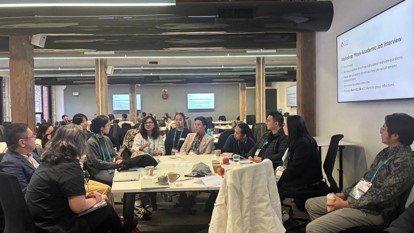
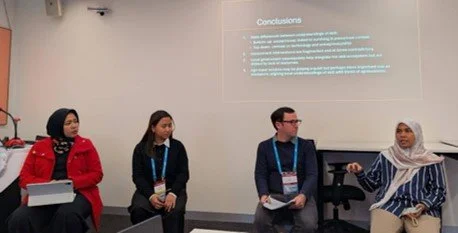
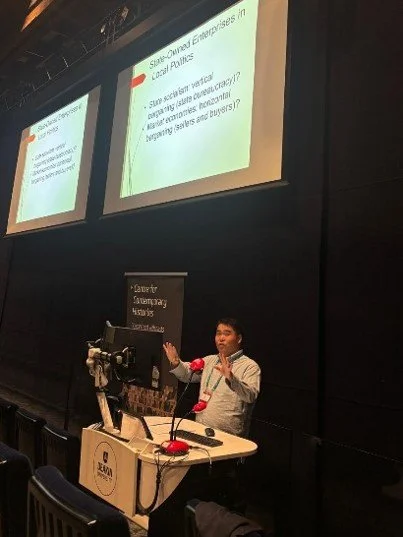
by Trisna Mulyati (PhD Candidate at the University of Technology Sydney)
Photos supplied.
ASAA 2026 was my first ASAA conference and my first real exposure to the Asian Studies community. Coming from an innovation and entrepreneurship main background researching smallholder agritech ecosystems. At first I wasn't sure how my work would fit a conference so strongly shaped by the social sciences, humanities, history, and politics. But this quickly turned into a rich experience, thanks to the Indonesia Council bursary, I was able to take part in experiences I would otherwise have missed in such a beautiful place as Geelong.
The postgraduate workshop was a valuable space to meet other emerging scholars from the region and reflect on shared insights of the doctoral journey and after. I also learned a great deal from the conference speakers, and was particularly struck by Koji Hirata’s keynote on China’s geopolitical history of the Mao-era manufacturing transition to socialist industrialisation catastrophe (Angang, Manchuria), which I feel is really timely and full of resonant lessons for today’s industrial development pathways in Indonesia and others.
Another highlight was discussing directly with scholars whose work connects to my own, such as Thomas Reuter, Graeme MacRae, and Trent Brown. As well as meeting so many fellow Indonesians and Indonesianists from different universities and organisations. It was particularly encouraging to see such a strong female presence across the conference. Beyond the academic program, the angklung workshop with the Indonesian Embassy was also a joyful experience, and the food served at the conference really satisfied our Asian taste buds. It is a good reminder of how powerful cultural and culinary exchange can be, even in scholarly spaces.
Finally, coming to ASAA gave me the chance to meet the Indonesia Council team in person. Thank you to Natali, Tamara, Elly, Lis, Monika, and everyone else, who are all really kind doing such great care and work on Indonesia-Australia studies. I left Geelong feeling grateful and motivated about contributing more to Asian studies, Indonesia Council, and beyond. Looking forward to the next one(s) hopefully.
Narratives for Liberation: writers’ workshop series honour the legacy of Aprila Wayar


by Grace Tan-Johannes, PhD candidate at the University of Melbourne, and co-founder of the Black Rose Scholarship.
Photos courtesy of Adel Tahitoe.
“Kaka sayang, jangan khawatir. Banyak orang baik jaga anana dong,” was my last words to her as I held her hand. My dear sister, do not worry. Lots of good people looking out for them girls.
It was December 2024 and she was on life support. Being unemployed, freshly divorced and on my way to start afresh in Australia, I didn’t know how to be one of those “good people.” But I knew this was goodbye.
My mind travelled to January 2024 when she was still the Aprila I knew. Back then I was the sick one: she drove me to the hospital on the back of her motorbike in the rain.
She asked me if I’d join her on an investigation in Papua. I said yes and we worked on a proposal. It was a blur to me, but I remember how much I’d want Aprila’s guidance if I ever had the opportunity to work on Papua again. Alas, we did not secure the funding. We parted ways with a, “Keep in touch, let’s hope the next collab is meant to be!”
Aprila Wayar (1980-2025) was the first female West Papuan novelist, as well as a trailblazer in Papuan journalism, activism and diaspora storytelling ecosystems. She published six novels that package Papuan history, human rights and women’s experiences as relatable stories experienced by ordinary Papuans. One of them is “Rootless Black Roses,” which invites readers into an intimate portrait of life under the Indonesian military occupation from the perspective of a young mother juggling family and career responsibilities in urban Jayapura.
Aprila and I met in 2017 after I’d finished my master’s thesis on Indigenous Papuan social capital, and she’d just released her second novel Dua Perempuan. We only saw each other about once a year, but our friendship revolved around dreaming of potential writing collaborations and designing capacity building opportunities for Papuan writers. She introduced me to her daughters as Madé, Logat Papua for “Mum’s little sister.”
After a 14-month battle with stroke, Aprila passed away in Yogyakarta on 18 October 2025. She is survived by two teenage daughters who miss her sorely, and are both currently attending Year 10 in boarding school with the help of the Black Rose Scholarship.
“Don’t be a writer, there’s no money in it,” Aprila’s daughters recalled what their mum used to say. I laughed. “You know, she’s not wrong! But Mum did leave you with legacies that money can’t buy.”
After Aprila’s death, her relatives wilfully abandoned the girls as punishment and an attempt to pressure them to move to Papua to take care of an aunt with cancer. Her close friends turned their backs on her daughters, not wanting to cause trouble with her relatives despite knowing their intent. Mutual friend Olin Monteiro urged me to write a scholarship proposal to give the girls bargaining power, which they welcomed.
Aprila and I both experienced domestic violence at the hands of our partners. The journey has felt like endless darkness at times, but I found my light at the end of the tunnel through purpose and community. Aprila did her best but ultimately had her life cut short by circumstances she never asked for. That’s how I know what is at stake if nobody safeguards her daughters, and that healing from traumatic losses is a long term collective endeavour.
The Black Rose Scholarship has been a leap of faith where Olin and I didn’t always know how we were going to make it, other than we need to invite people in to help us. Personally, this journey has gifted me with a sisterhood of Aprila’s friends and followers in three countries who truly understand the spirit in which her works were written, and are determined to manifest that legacy for her daughters. It has also given me the privilege of guiding her daughters through living with grief and reclaiming a sense of belonging as educated Indigenous women with a confident voice in the diaspora.
In June 2026, we launched our first Black Rose Scholarship campaign: a West Papuan Literature Dinner co-hosted by Melbourne Bergerak. A celebration of “Rootless Black Roses,” we honoured Aprila with a dramatic reading from the book, poetry, music and a deep dive into the novel as a love letter from a Papuan mother to her daughter(s) with prayers for their liberation.
Featuring Papuan, First Nations, Indonesian and American allies on the panel, we commemorated the memory of Aprila’s stories, motherhood and friendship. We also received the generous support of the Congee Social Club for food, Menumbook for social media, Arts For Women for disbursing the funds raised in Indonesia, and some silent supporters for the venue.
Thanks to this inaugural campaign, we were able to pay off the academic year’s school fees for both girls up front, and to secure two-thirds of their boarding fees. We are still working on the remainder, as well as other needs such as stipends, health insurance and legal aid.
A three year commitment means the journey is still long. But we are proud to send off the Wayar girls to boarding school with their heads held high… and the assurance that with a little help from her friends on this side of life, death is not stopping Mum from looking after them.
This August and September, the Black Rose Scholarship and Menumbook return with Narratives of Liberation, an online writer’s workshop trilogy mentored by friends of Aprila Wayar. Featuring established Indigenous and ally writers from Australia, Papua and West Timor, these workshops will explore intimate themes such as roots, kinship, sense of belonging, exile, grief, intergenerational memory, dreaming and healing.
Story doula Belinda Lopez’s 29 August workshop will explore narrative healing and memoir writing techniques to craft stories rooted in history and culture. On 12 September, researcher/storyteller Gispa Warijo will teach the application of the decolonial eco-feminist lens in writing narrative essays that reclaim one’s voice of belonging and kinship after surviving displacement. Finally on 26 September, Dicky Senda will share his experiences building the Indigenous literacy ecosystem Lakoat.Kujawas in his hometown in the Mollo highlands.
The Black Rose Scholarship is committed to secure the funds needed to raise Aprila’s girls by building ecosystems of liberation storytellers across borders. We are open to collaborate with Indigenous, diaspora, feminist or queer writers, artists, academics and activists who find resonance in Aprila’s legacy and are committed to building a freer world, one story at a time.
We fully acknowledge a history of Indonesian presence in Papua that is far from peaceful, and the fact that no matter where we stand in regards to Papua, we are all people born from the womb of colonialism who have a long way to learn what liberation and solidarity really mean. We believe that liberation starts with safeguarding those within our circle of influence, and being a safe space where chosen kin across diverse walks of life are able to meet in the gentle spirit of a mother paving safe passage for her children.
We proudly invite you to join our workshops and write with us. Paid tickets are priced at a sliding scale and all bundled with a digital copy of “Rootless Black Roses” in English or Indonesian. We also offer free tickets to Indigenous West Papuan participants at home or in the diaspora.
A Black Rose Scholarship panel will also be featured at the upcoming Ubud Writers and Readers Festival in Bali in October 2026. Roots of Remembrance: Honouring Aprila Wayar’s Voice from Papua will be moderated by Rebecca Blair Young (translator of “Rootless Black Roses”) and feature Black Rose Scholarship co-founder Olin Monteiro.
Note from the editor: See details in our Upcoming Events section above.