
Indonesia Council Digest – June 2026 Edition
Selamat datang to the June edition of the Indonesia Council Digest.
Since we last wrote, the Andrie Yunus case has moved to trial and sentencing for the four accused. The trial has drawn criticism from human rights observers, and took place within a wider context of student protests against wasteful government policies, a sliding rupiah, and concerning developments regarding one of the Papuan activists featured in Pesta Babi (Pig Feast: Colonialism in Our Time).
Here at IC, we’re looking ahead to a busy end of June and start of July with the inaugural Indonesia Council Undergraduate Day, our dinner and roundtable in the margins of the ASAA conference at Deakin Geelong, and our Annual General Meeting on 1 July. Importantly, nominations for the 2026–2028 Executive Committee close Monday 22 June (23:59 AEST): all positions are open, including the new Emerging Leaders Liaison Officer. Position descriptions and nomination details are on our website.
Our next newsletter will be out in August so do send through anything you’d like us to share (iclist [at] gmail.com). Selamat membaca!
Sampai jumpa lagi,
Natali and the IC team
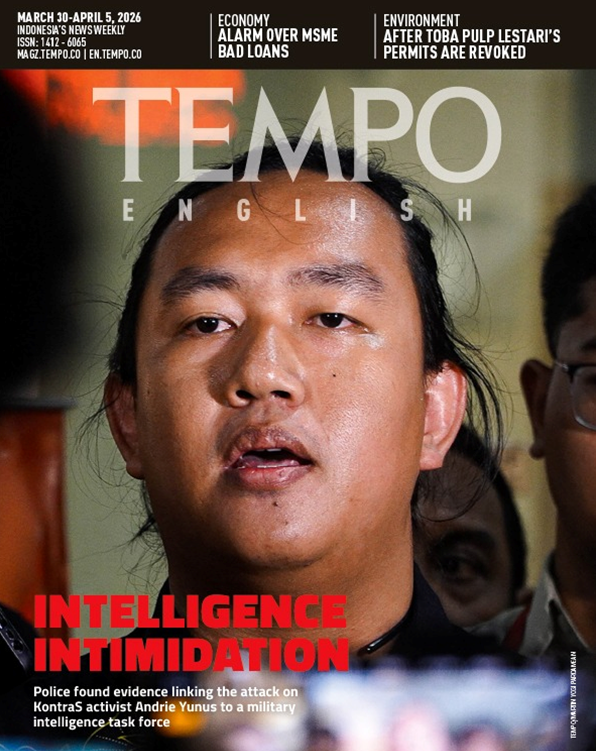
Cover page for Tempo Magazine edition TE2634 – Intelligence Intimidation.
An update on the Andrie Yunus case
In our April edition we shared Indonesia Council’s support for calls for an impartial investigation into the March acid attack on Andrie Yunus, Deputy Coordinator of KontraS, which left him with serious and permanent injuries.
Since then the case has gone to trial and four members of the Indonesian National Armed Forces have received jail sentences. The trial drew international concern for its “political theatrics”, with Rafiqa Qurrata Ayun (“Courtroom or comedy?” for Indonesia at Melbourne) arguing it signalled renewed military impunity. UN human rights experts also condemned the use of military proceedings, warning they risk perpetuating impunity, and called for a public trial in the civilian justice system.
What’s happening
Reminders for members — and ASAA attendees
If you’re heading to Deakin University’s Geelong Waterfront Campus for the ASAA conference, here is a final reminder of our IC activities. Our inaugural Undergraduate Day runs on Monday 29 June (for registered students only), followed by our dinner on Tuesday 30 June (please get in touch if you’d like to come along) and our roundtable Research and education opportunities in Indonesian Studies on Wednesday 1 July, 3:15–4:45pm.
Our Annual General Meeting is also on 1 July, from 5pm, in hybrid format (in person at the conference and online via Zoom) following the Roundtable. Full details were sent to all members on 22 May, so please check your inbox or find more information on our website.
Public Lecture by the Indonesian Vice Minister for Foreign Affairs
Australian National University, 1 July, 5-7pm – registration essential.
H.E. Arif Havas Oegroseno has served as Vice Minister for Foreign Affairs, Republic of Indonesia since October 2024. His diplomatic career spans over 30 years, with key assignments in Geneva (1993–1997) and Lisbon (1999–2002). He has led major negotiations on maritime boundaries, extradition, trade, and sustainable development and was instrumental in developing Indonesia’s Ocean Policy and the Archipelagic and Island States (AIS) Forum. This public lecture will focus on the challenges shared by Indonesia and Australia in facing an uncertain Indo-Pacific region, with special attention to maritime issues. This in-person only event is hosted by the ANU Indonesia Institute and the East Asian Bureau of Economic Research.
Raga, Irama & Rasa: The Mystical Worlds of Javanese Performing Arts — Australian Museum, Sydney
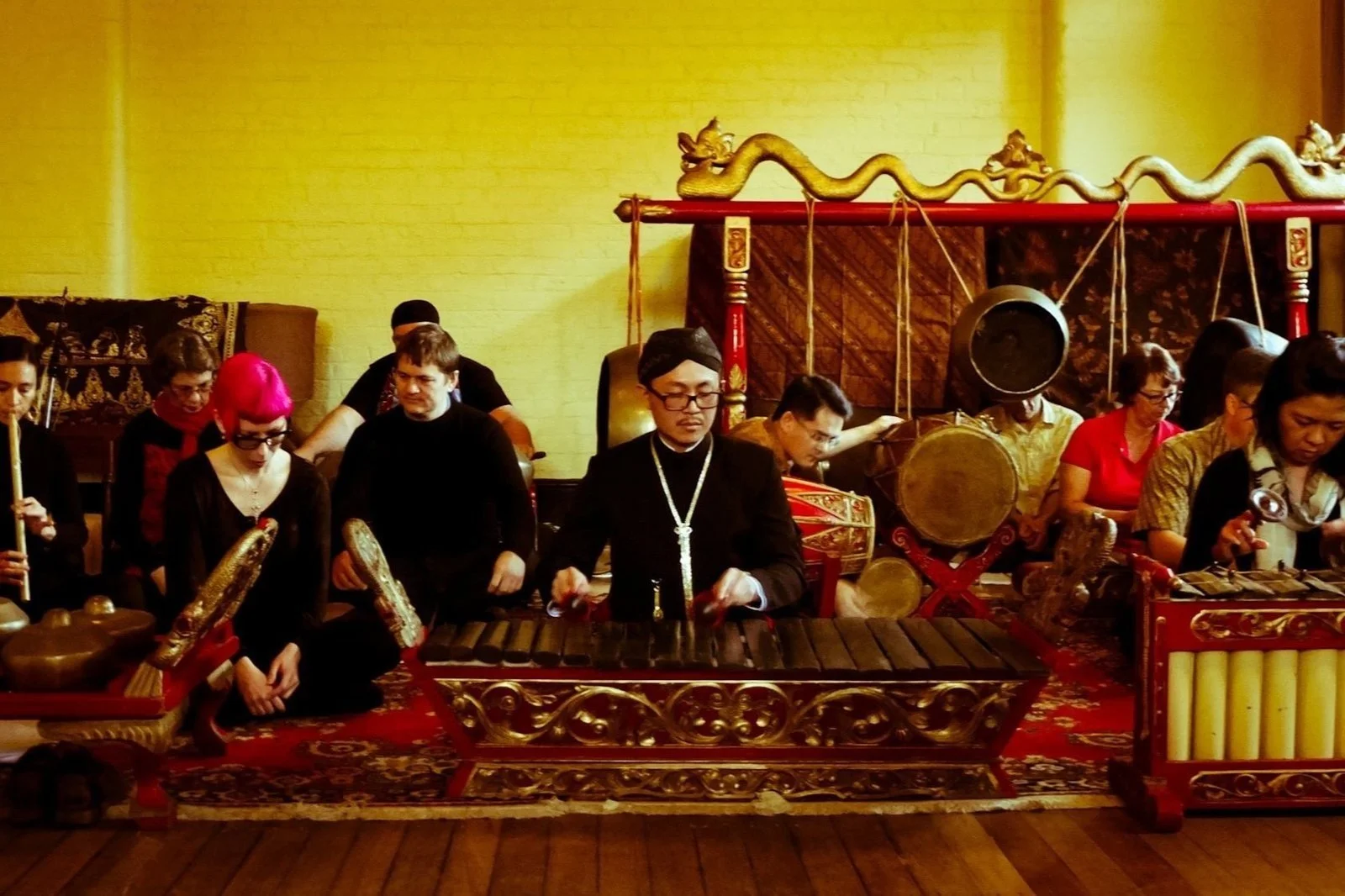
For those in Sydney, don’t miss local Javanese gamelan group Langen Suka at the Australian Museum for a three-part series on Javanese dance, music, and aesthetics:
From Raga to Wirama — Saturday 20 June, 11am–12pm. Posture, movement, and costume in classical Javanese dance. ($16 members / $20 non-members)
Lagu within Irama — Saturday 4 July, 11am–12pm. Melodic layering, cyclical time, and the architecture of Javanese gamelan. ($16 members / $20 non-members)
Raga, Irama & Rasa — Music and Dance Performance — Saturday 11 July, 2–3pm. A free public performance celebrating more than 40 years of partnership with the Museum. (Free, registration required)
Full details and bookings here
Jengki
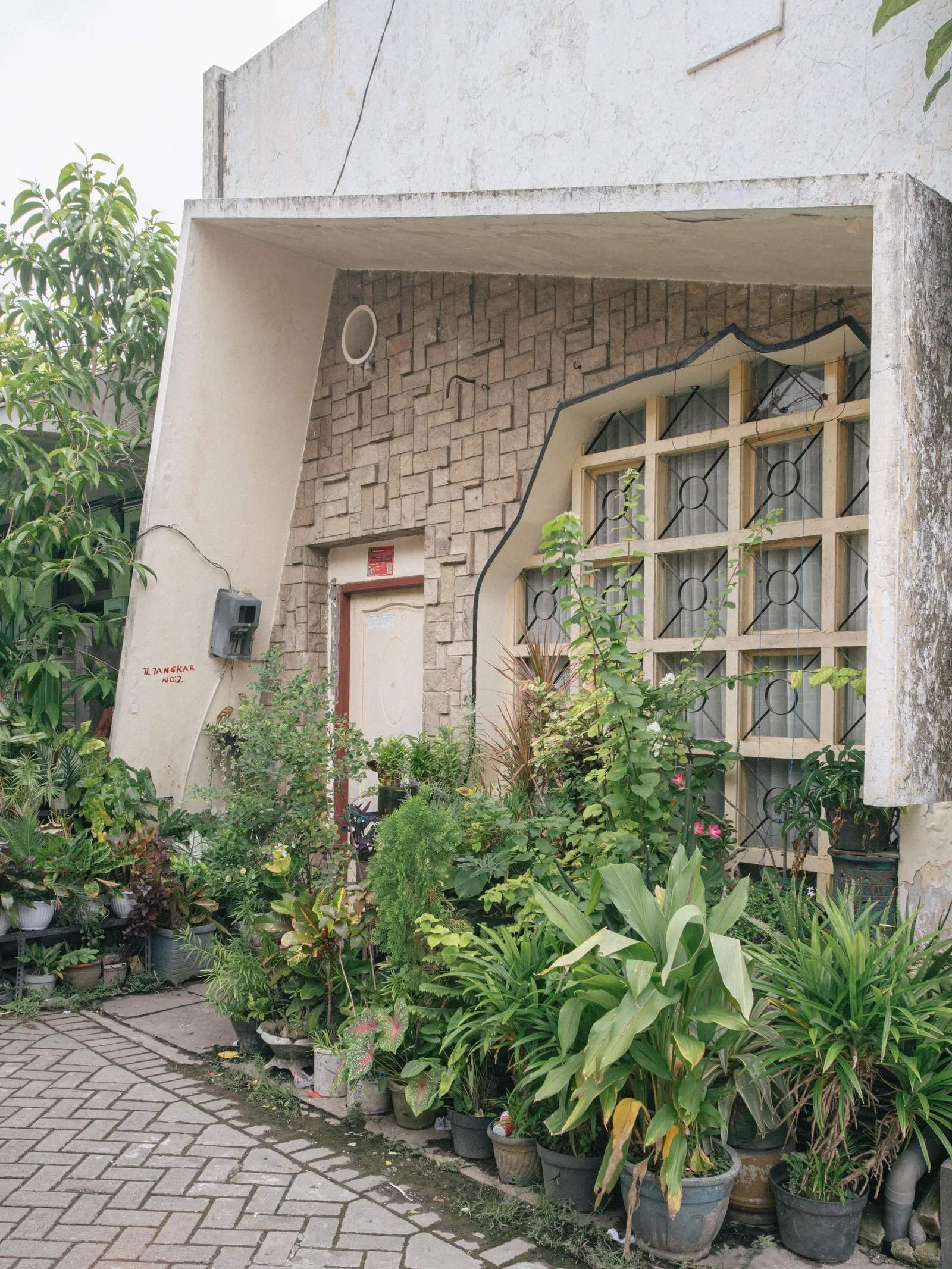
And still on the topic of all things culture, The World of Interiors recently took a special look at jengki, the distinctive architectural style that emerged in Indonesia in the post-independence years. It’s a visual feast but also raises important questions about the lack of heritage protection for these distinctive buildings.
Other cool stuff
Launch of Years and Years of Living Neighbourly
Those of you who know Liam Prince, Director of Acicis, will know how passionate and well read he is on Indonesian history – and on the many ways it has shaped and been shaped by Indonesia’s relationship with Australia. This passion has now found an outlet in the first of many planned episodes of The Years and Years of Living Neighbourly. In it, Liam turns his attention to the life of Molly Bondan (1912–1990), a NewZealand-born Australian whose political convictions led her to become a significant figure within the Indonesian independence movement and in the early administration of the Indonesian Republic – including as Sukarno’s English-language speechwriter. As Liam puts it, from the vantage point of 2026, Molly stands as a pioneering example of what an Australian life rooted firmly in our region can looks like. You can watch the video essay here, and sign up for updates on Substack here.
INDERA: A network for Indonesian HDRs and alumni
Worth sharing with your Indonesian students and early-career colleagues: INDERA (the Indonesian Network of Doctoral and Early-Career Researchers in Australia) is a network of Indonesian higher-degree-by-research candidates and HDR alumni, established in 2024. It now connects more than 500 members across over 30 institutions in Australia, Indonesia, and beyond, organised into multidisciplinary knowledge clusters spanning architecture, the arts and humanities, medicine and health, sustainability, water, and energy. Those interested in joining can register via this form and then contact the INDERA team (Anis Maris) on WhatsApp.
ROOTS: Walter Spies and Bali’s ‘shared heritage’
For those drawn to art and Bali’s postcolonial history, keep an eye out for ROOTS, a project by author, filmmaker, and curator Michael Schindhelm revisiting the legacy of Russian-born German artist Walter Spies (1895–1942) a century after he first travelled to Indonesia. Presented by Basel’s Kulturstiftung H. Geiger and shown last year at the ARMA Museum in Ubud, the exhibition and its accompanying docu-fiction film trace Spies’ enduring influence on Balinese art and the island’s turn into a global tourism destination, alongside work by contemporary Balinese artists Made Bayak and Gus Dark. In the film, Spies appears as a spectral presence wandering modern Bali (a nice resonance with this month’s ghost-themed Inside Indonesia.). The film continues to screen at venues across Indonesia and internationally, and you can also explore the exhibition online in an immersive virtual walkthrough, offering a digital journey through the inaugural Roots exhibition that premiered in Basel, Switzerland.
Jobs and opportunities
Visiting Fellow (UNAIR-funded) —
Universitas Airlangga, Surabaya
Universitas Airlangga’s Visiting Fellow program, run through Airlangga Global Engagement, invites international academics to spend a short period (typically 5–14 days) at UNAIR — delivering guest lectures, running seminars or writing workshops, and building research and staff-mobility links. UNAIR funding is attached; applicants apply via the relevant research centre.
Indonesian language immersion —
Lumen Language School, Batu (East Java)
Lumen Language School offers an experience-based Indonesian language and cultural immersion program (BIPA) in Kota Batu, East Java, pairing morning classroom instruction with afternoon fieldwork. Programs run from one to four weeks and can be arranged for individuals or small groups. More details are available via the school’s Instagram or by email: [lumenlanguageschool [at] gmail.com].
New books on your radar
Balinese Social Entrepreneurs and the Pursuit of Harmony
Congratulations to Joanna Vogeley, whose new book Balinese Social Entrepreneurs and the Pursuit of Harmony: Values, Enterprise, and Social Change was just published. Born out of her PhD, it draws on ethnographic fieldwork and four case studies — across crafts, arts, disability, and hospitality — to ask why Balinese pursue social entrepreneurship and what makes their approaches distinctive. Grounded in tri hita karana – the philosophy of harmony between people, the spiritual realm, and nature – Vogeley conceptualises Balinese entrepreneurs as value-driven actors whose evolving networks generate collective agency and fresh perspectives on ethics, innovation, and social change.
The Good Sea
Congratulations also to Vannessa Hearman on The Good Sea: The Journey of the Tasi Diak and the Politics of Refugee Protection in Australia (MUP, 2026).
In May 1995, eighteen East Timorese asylum seekers — among them a six-month-old baby — reached Darwin in a small wooden fishing boat after five days and six nights on the Timor Sea; the Tasi Diak was the only such boat to make it to Australia across the entire 24-year Indonesian occupation of East Timor.
Drawing on archives, government records, and interviews with the asylum seekers, Hearman reconstructs the voyage and the lives of the young activists of the East Timorese underground, tracing the arrival’s impact on Australia–Indonesia relations in the final years of the Suharto era and the questions it still raises about Australia’s treatment of asylum seekers. This was the bestselling book at the recent NT Writers’ Festival!
And a tip for those attending ASAA: The Good Sea will be launched by Professor Kate McGregor at Deakin University, Geelong Waterfront Campus, on Tuesday 30 June at 12.15pm. The launch will be hosted by Dr Wulan Dirgantoro.
The Precarious Past in Premodern Java
Wayan Jarrah Sastrawan’s eagerly anticipated book, The Precarious Past in Premodern Java (University of California Press), come out in July. The book examines how Javanese societies between the 5th and 15th centuries CE made and transmitted knowledge of the past under precarious conditions. Drawing on Javanese, Sanskrit, Malay, and related sources, Sastrawan reconstructs a dynamic culture in which written and non-written modes of transmission coexisted, and challenges modern assumptions about what counts as “history.” A free open-access edition is available through UC Press’s Luminos program.
30 Years of ACICIS
Many thanks to Liam Prince for this update!
Also coming out in July: ANU Press will publish Experiencing Indonesia: 30 Years of ACICIS, edited by Kirrilee Hughes, Kate Naidu, and David Reeve — a free, open-access volume marking three decades of the Australian Consortium for ‘In-Country’ Indonesian Studies. Bringing together essays and personal reflections on ACICIS’s making, growth, and impact, the collection features many familiar names from the IC community: Elly Kent on building an art and design course for Australian students in Indonesia, Jacqui Baker and Annie Pohlman on fieldwork and the making of research expertise, and so many more.
Not every organisation or initiative gets to mark its 30-year milestone. Arguably, Indonesian Studies in Australia is more than fairly endowed with a complement of longstanding institutions. These include ANU’s Indonesia Project (celebrated 60 years last year), AIYEP (44 years old this year), Inside Indonesia (43 years young this year), and, yes, now, ACICIS.
ACICIS began as an idea pitched by David Hill to Indonesian Studies colleagues at a ILOTES Project Conference at Flinders University in April 1994. In his conference paper, David suggested that:
“Rather than burden staff in every institution across the country with the responsibility of administering competing, extended in-country programs, there appear to be considerable benefits in establishing a national consortium, through which individual institutions could choose to channel their own students … A consortium would bring economies of scale, reducing the overall Australian staff input and increasing student numbers by making the provision of in-country courses more economic and more accessible.”
Thirty years and 5,000+ ACICIS students later, David, along with countless academic and administrative colleagues across Australia and Indonesia have proven that the idea, if nothing else, had legs.
For those interested in the history, it is worth reading David’s 1994 conference paper in full.
Speaking personally, as a contributor to this edited volume, it has been a treat to have the occasion and motivation to do some retrospective intellectual spadework on the institutional origins of ACICIS. Even with my longstanding and intimate involvement, the process of researching and writing unearthed corners of ACICIS history and lore that were new to me.
Though I’m hopelessly partisan, I think this is a good, fascinating and valuable book. I commend the editors--Kate, Kirrilee and David--for pulling it together.
Publications and Podcasts
Australia’s oldest trading partner
Writing for The Interpreter, Ridvan Kilic and Sharyn Graham Davies make the case that Australia’s oldest trading partner was Indonesia — and it’s time students knew it. They argue that embedding the pre-colonial Makassan–Yolngu trepang trade into the Australian school curriculum, and reviving Indonesian language learning, would build the people-to-people understanding that security and trade treaties alone can’t manufacture. Fittingly, the piece draws on Kilic’s time as a 2025 Australian delegate on DFAT’s Australia–Indonesia Muslim Exchange Program (AIMEP), including visits to the MAREGE Institute in Makassar.
The Nadiem trial and Indonesia’s “rubber” anti-corruption laws
Meanwhile, in New Mandala, Indonesian-law scholars Simon Butt (University of Sydney) and Tim Lindsey (University of Melbourne) use the corruption trial of former education minister and Gojek co-founder Nadiem Makarim to unpack two deep problems in Indonesia’s anti-corruption regime. They argue that the loosely drafted “rubber articles” (pasal karet) of the Anti-Corruption Law — which can secure a conviction for causing “state loss” without proof of corrupt intent or personal benefit — leave the door open to arbitrary, politicised prosecutions, and trace the Constitutional Court’s repeated attempts to narrow them.
Taking the supernatural seriously
The latest edition of Inside Indonesia, guest-edited by Tito Ambyo and Jamie Edmonds, takes haunting and the supernatural as its theme — exploring how ghosts, spirits, and the unquiet past move through Indonesian life. Contributions range from encounters with the unseen in Bali and headless soldiers in Ponorogo to folk horror on screen and a dialogue on reading ghosts across journalism and anthropology. A rich and atmospheric read, free and open access as always.
Podcast: The people versus Fadli Zon
In a recent episode of Talking Indonesia, co-host Jemma Purdey spoke with Airlangga Julio — associate lawyer at AMAR Law Firm and a member of the Advocacy Team for Democracy — about the legal case brought against Culture Minister Fadli Zon, following his public questioning of whether the mass sexual violence of the May 1998 riots took place. A group of advocates took the matter to the Jakarta Administrative Court, with the trial concluding in April 2026. The conversation considers the court’s response and what the case means for the broader struggle over history, human rights, and democracy in Indonesia today.
Podcast: Elly Kent on Artists and the People
Last but definitely not least, check out the latest episode of the New Books in Southeast Asian Studies podcast featuring IC Executive Committee member Elly Kent discussing her book Artists and the People (NUS Press). Exploring the work of established and emerging artists in Indonesia’s vibrant art world, this book examines why so many artists in the world’s largest archipelagic nation choose to work directly with people and in the studio.
Latest on The Perantau Podcast
Our Digital Engagement Editor, Billy Adison Aditijanto, continues with The Perantau Podcast, sharing stories from Australia's Indonesian diaspora.
April's episode featured Indonesian actor Sekar Sari, currently pursuing a PhD on "Indigenous Intercultural Bodies" at the University of Melbourne, as they talk about research woes, cultural representation through dance, and how having kids flipped her approach to art and research on its head. More recently in June, Billy welcomed Mohammad Desgia, LPDP Unimelb 2025/2026 president, to analyse if the expectations put on LPDP scholarship recipients are fair, what responsibilities does he place on himself, and what kind of role should Indonesians play on the world stage.
On the next episode, Billy will host Dr. Jonathan Haposan – doctor, academic, researcher, current PhD candidate at The University of Melbourne, and current president of the Mata Garuda ANZ alumni network. In August, the husband-and-wife duo of Jess and Toni, the faces behind Melbourne's latest Indonesian restaurant, Ulam Rasa. And September will feature Pipin Jamson, Melbourne-based activist and academic who has been the public face of Melbourne Bergerak, a collective of Indonesian students, workers, activists & allies. They'll talk about Indonesia's dangerous democratic regression, the power of diaspora activism and the risks that come along with it.
Stay tuned for more episodes coming this year and reach out to Billy if you know any interesting guests you'd like to see.